
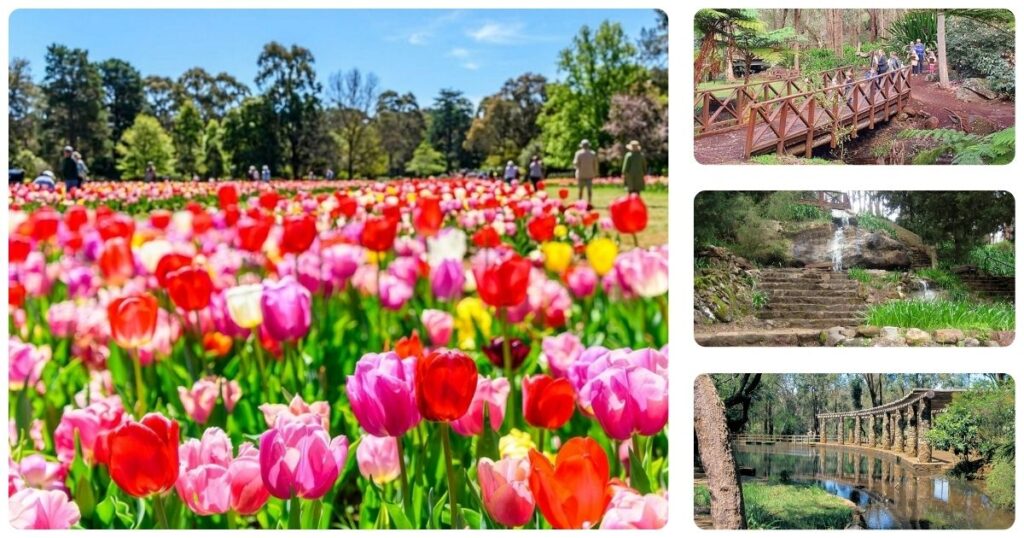
Drive into a sheltered valley roughly 35km southeast of Perth in Roleystone and 14 hectares of cultivated botanical garden open up, backed by 59 hectares of native Perth Hills bushland. This is Araluen Botanic Park. For most of the year it’s an excellent heritage garden built around significant rose and camellia collections; for eight weeks from late winter into spring, it becomes something else entirely, a valley filled with hundreds of thousands of tulips during the annual Springtime Tulip Festival.
Who will Enjoy Araluen Botanic Park
Garden and flower enthusiasts chasing a specific bloom (roses, camellias or tulips depending on season), families wanting a well-set-up half-day out with a playground and heritage train, and photographers after both floral colour and heritage stonework. It’s less suited to anyone wanting a quick 20-minute stop; without a car it’s hard to reach, and the park rewards two to three unhurried hours rather than a drive-by.
History
J.J. Simons, founder of the Young Australia League (established in the early 1900s to promote youth education through travel), purchased the land in 1929. On 9 November 1930, the valley was formally dedicated “to the service of youth” by the WA Governor, Sir William Campion, and the gardens became a memorial to Young Australia League members killed in action, a detail worth knowing as you walk through what can otherwise feel like a purely decorative space. The name Araluen is an Aboriginal word variously translated as “singing waters,” “running waters” or “place of lilies,” and also nods to Henry Kendall’s 19th-century poem of the same name. The state government purchased the park in 1990, and since 1995 the Araluen Botanic Park Foundation has managed and progressively restored more than 30 heritage structures on-site, including the original 1930s tearooms, now operating as Chalet Healy Café.
The Collections
The rose collection, several thousand bushes across multiple garden zones rather than a single bed, peaks from mid-October through December, with a secondary flush in autumn around April to May. The camellia collection, over 230 varieties and recognised as a Garden of Excellence by the International Camellia Society, blooms roughly April through October, making it the more reliable option if you’re visiting in the cooler months when the roses are dormant. The sheltered valley setting matters here, creating microclimates that protect both collections from Perth’s harsher summer heat.
The Springtime Tulip Festival
This is Araluen’s headline event, running roughly late August into September, with hundreds of thousands of tulips and tens of thousands of spring bulbs planted across the valley. Confirm exact dates and pricing closer to the time at araluenbotanicpark.com.au, since the festival window shifts slightly year to year depending on the season. Weekend festival programming typically includes live music, food trucks, face painting and performances, alongside the park’s regular heritage train. It draws a substantial share of the park’s total annual visitors into this single eight-week window, so expect weekend crowds, parking pressure, and slower cafe service; weekday mornings are noticeably calmer if your schedule allows it.
Practical Details
The park is generally open daily, with extended or adjusted hours during the Tulip Festival. Admission pricing varies significantly between the regular season and festival period, and has shifted over recent years, so treat any specific figure as indicative only and confirm current adult, concession, child and family pricing directly on the official website before you go; festival pricing in particular runs noticeably higher than regular-season admission.
On-site facilities include Chalet Healy Café for coffee and light meals (with pop-up cafes and food trucks supplementing this during the festival, though queues can build on peak weekends, so a packed lunch is a reasonable backup), a gift shop, picnic areas with electric barbecues, a playground, and clean, well-signed toilets. Parking is free but fills on festival weekends, so arrive early or opt for a weekday visit if avoiding queues matters to you.
Araluen Botanic Park Visitor Map
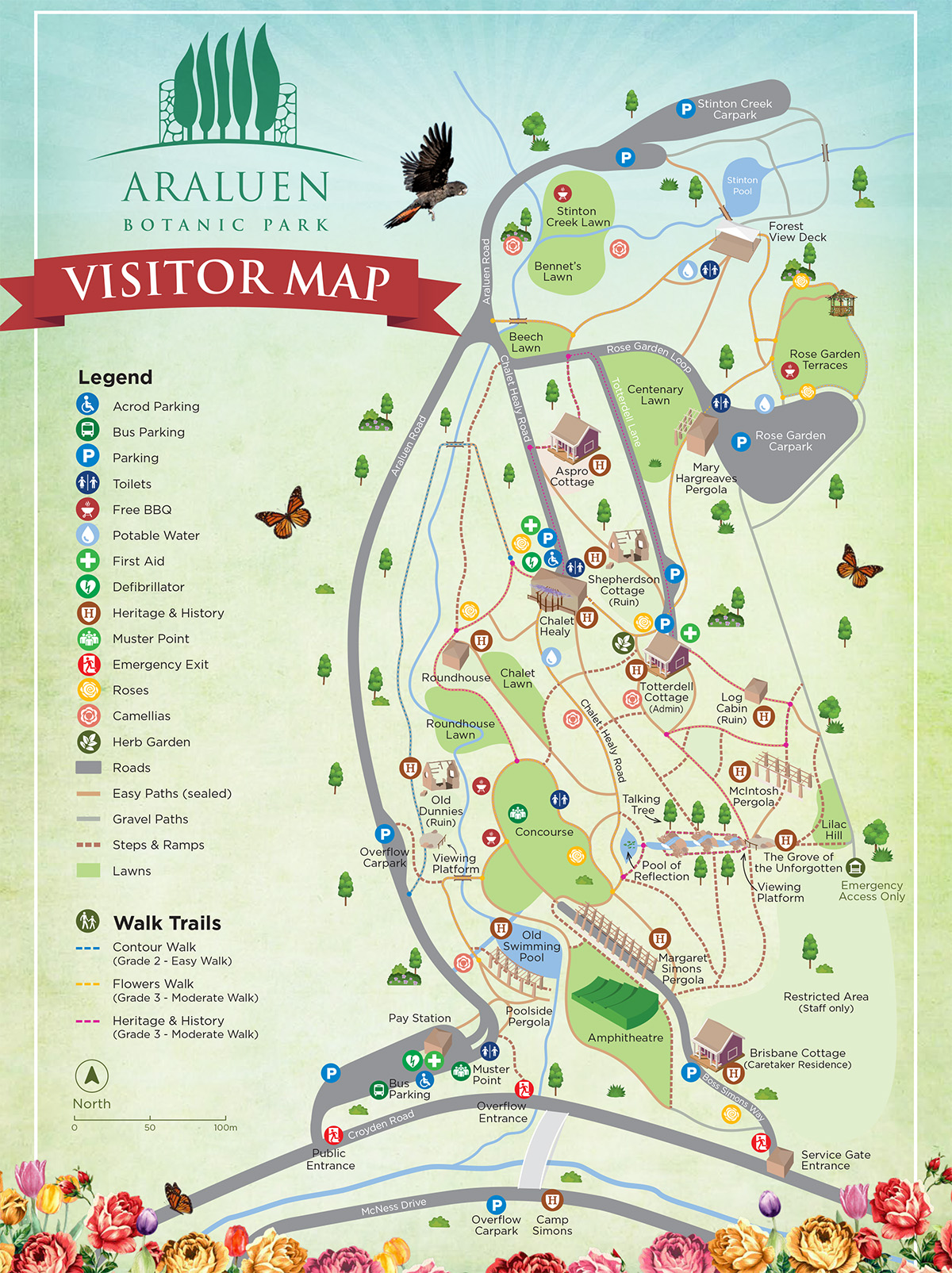
The Heritage Train and Family Facilities
A miniature trackless train offers roughly 20-minute hop-on, hop-off scenic rides through the main garden zones on select days, a useful option for families with younger kids or anyone wanting to cover the park without a lot of walking; check current operating days and times before visiting, since these can change seasonally. Children’s activity packs are typically available for a small fee, and the on-site playground suits primary-school-age kids well. A realistic family visit: playground and activity pack to start, a ride on the heritage train, lunch at Chalet Healy Café, then an unhurried walk through whichever collection is in season.
Getting There
A car is the practical option for most visitors. Take the Albany Highway or Brookton Highway route into Roleystone; allow around 40 minutes from Perth CBD off-peak, closer to 50 to 60 minutes during peak traffic. Parking on-site is free.
Public transport exists but is limited and impractical for most day trips. The nearest useful connection is the Armadale train line to Kelmscott Station, then Transperth bus route 241 (roughly hourly, first and last services around 6am and 7:30pm) toward Roleystone; the closest stop still leaves a walk to the park entrance, and the infrequent timetable means a return trip needs careful planning around the schedule. If you don’t have a car, a rideshare from Armadale or Kelmscott station, or joining an organised tour during the Tulip Festival, is a more realistic option than relying on the bus alone.
What Locals Know
Regular Perth Hills visitors treat October and November, just after the Tulip Festival wraps up, as one of the better-kept secrets on the calendar: roses coming into peak bloom, dramatically smaller crowds than the festival, and standard rather than festival-inflated admission. Locals also know festival weekend cafe queues can run long, so bringing a picnic rather than relying on Chalet Healy Café during peak periods is a common workaround. If camellias are your priority rather than tulips or roses, locals point visitors toward a quieter April or May visit, when the park is peaceful and the camellia displays are at their best.
Combine With the Perth Hills
Araluen sits within reach of several other Perth Hills attractions, including Serpentine Falls, Lesmurdie Falls and Mundaring Weir, all roughly 10 to 20 minutes’ drive away, plus smaller local producers like orchards and cider houses in the surrounding area. A realistic day: two to three hours at Araluen, lunch on-site, then a shorter waterfall walk or a cellar-door stop nearby to round out the afternoon.
Is It Worth It?
Yes, and it rewards picking your season deliberately. The Tulip Festival delivers spectacle but real crowds; the quieter months either side offer a more peaceful, still beautiful garden experience at lower cost. Either way, budget the full drive and a proper couple of hours rather than treating it as a quick stop.
Frequently Asked Questions
How far is Araluen from Perth?
Roughly 35km southeast of the CBD in Roleystone, about 40 minutes’ drive off-peak. A car is the practical option; public transport (Armadale line to Kelmscott, then an infrequent connecting bus) exists but is impractical for most visitors.
When does the Tulip Festival run?
Roughly late August into September each year. Confirm exact dates and pricing on the official website closer to the time.
Is it family-friendly?
Yes, with an on-site playground, a heritage trackless train, picnic areas with electric barbecues, and children’s activity packs typically available.
What’s the best time to avoid crowds?
October and November, just after the Tulip Festival, or the quieter autumn and winter months for camellia season.
Can I bring my own picnic?
Yes, picnic areas with electric barbecues are available throughout the park, and it’s a sensible backup during busy festival weekends when cafe queues can be long.
What’s the history behind the name?
Araluen is an Aboriginal word meaning roughly “singing waters,” “running waters” or “place of lilies,” and the park was dedicated in November 1930 as a memorial to Young Australia League members killed in action.
The Close
Araluen rewards visitors who pick their season with intent: come for the tulip spectacle and accept the crowds, or come in the quieter months for roses, camellias and peace in a sheltered Perth Hills valley. Either way, it’s worth the drive and worth more than a rushed hour.