
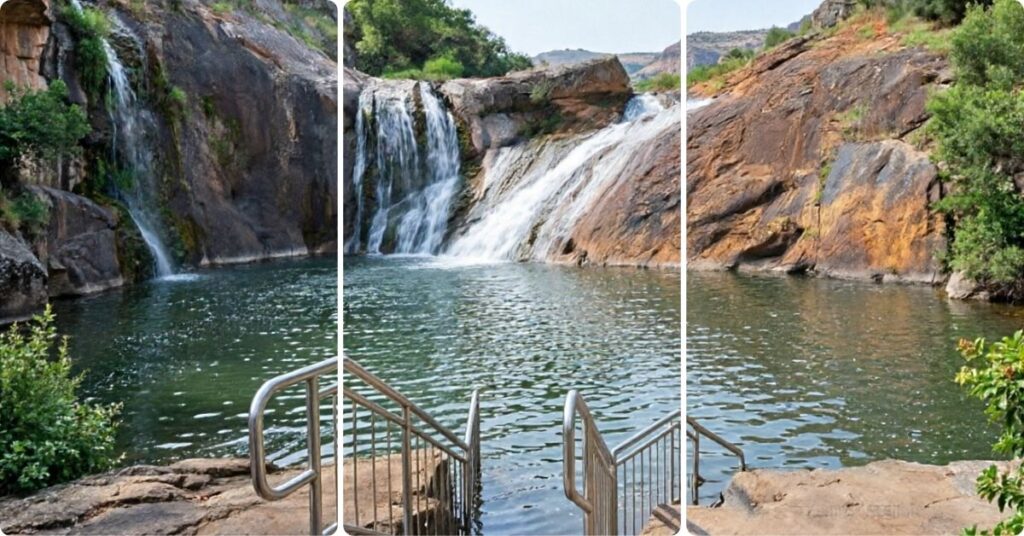
Serpentine Falls is Western Australia’s most popular inland swimming destination, just 55 kilometres southeast of Perth. Known locally by its Noongar name, Waangaamaap Bilya, this granite-pool waterfall draws families, hikers, and picnickers year-round. Whether you’re after a cooling swim, a scenic walk, or a quiet picnic with kangaroos, Serpentine Falls delivers a complete bushland experience within an easy drive from Perth city.
Quick Facts
Location: Serpentine National Park, 55 km southeast of Perth
Drive time: Approximately 1 hour from Perth CBD
Entry cost: $15-17 per vehicle (free with valid National Parks Pass)
Opening hours: 8:30 am to 5:00 pm daily (no vehicle access after 4:15 pm)
Parking: Gravel car park at main picnic area; capacity limited and closes to new visitors on peak days, often before 10 am
Facilities: Picnic tables, gas BBQs, accessible toilets, shaded areas, grassed picnic grounds
Waterfall: 15-metre cascade over granite outcrops into a large rock-lined pool
The Falls and the Rock Pool
Serpentine Falls is a cascading 15-metre waterfall that tumbles into a large, granite-fringed rock pool. The setting is striking: the waterfall’s flow depends entirely on seasonal rainfall, with the most impressive displays after winter rains. The rock pool itself invites swimming, though water quality is a critical consideration.
Important water quality note: Swimming was prohibited in December 2024 due to poor water quality and detection of Naegleria fowleri (a brain-eating amoeba). Before entering the water, check the current water quality status with the Department of Biodiversity, Conservation and Attractions (DBCA) or visit https://alerts.dbca.wa.gov.au/ (go to “List View” and look for the search bar and type serpentine) for real-time alerts. The Shire of Serpentine Jarrahdale conducts regular microbiological testing and assigns swimming grades to the site. Always verify current conditions before planning to swim.
The surrounding granite landscape offers excellent photo opportunities, and visitors consistently mention the unexpected joy of seeing kangaroos grazing in the picnic area. As many visitors tell us, “we absolutely loved the kangaroos that live around the picnic area, up close wildlife we hadn’t expected.” The peaceful atmosphere, particularly on weekdays, makes this a rewarding blend of natural beauty and accessibility.
Walking Tracks
Serpentine National Park has four named walking tracks, ranging from easy family strolls to challenging full-day hikes. All are well-marked and maintained.
Serpentine Falls Walk Trail (Main Falls Trail)
Distance: 400 metres one-way (approximately 10-15 minutes return)
Difficulty: Easy; flat, hardened surface
Accessibility: Wheelchair accessible and suitable for prams
This is the direct route from the car park to the waterfall and rock pool. It includes a bridge crossing and boardwalk sections with no steps or steep inclines. It’s the ideal introduction to the falls.
See: Trail Guide
Stacey’s Loop
Distance: 1.9 km loop (45-60 minutes)
Difficulty: Moderate
Accessibility: Not wheelchair accessible; natural uneven surface
This walk winds through beautiful jarrah forest and crosses Gooralong Brook several times via bridges. It’s peaceful and perfect for those seeking a step up from the main trail without extreme difficulty.
See: Trail Guide
Baldwins Bluff Nature Track
Distance: 6 km return (1.5-2 hours)
Difficulty: Moderate
Accessibility: Bushwalking standard; uneven sections
This track offers panoramic views across the Serpentine area through diverse landscape. It’s suitable for walkers with reasonable fitness who want more challenge than Stacey’s Loop.
See: Trail Guide
Kitty’s Gorge Walk Trail
Distance: 7 km each way (14 km return; can be accessed from either end)
Difficulty: Moderately difficult; steep sections, loose stones, uneven and potentially slippery ground
Accessibility: Not wheelchair accessible; requires good fitness
This is the park’s most challenging track, but the extended forest trek through granite gorge justifies the effort. The trail passes through beautiful native forest, shows wildflowers in spring, and offers excellent wildlife spotting. It connects to Jarrahdale at the far end, making it a scenic destination walk.
See: Trail Guide
When to Visit
Serpentine Falls changes dramatically with the seasons. Choose your timing based on what you want from the experience.
Spring (September to November): This is the best overall time to visit. The waterfall flows impressively from late winter rains, wildflowers are in full bloom throughout the park, and the weather is warm and dry. Expect moderate to high crowds on weekends, but this is also when the park truly shines. Hundreds of native wildflowers bloom between late winter and spring, with peak display from July to November.
Summer (December to February): Water temperatures are warmest, perfect for swimming once water quality permits. However, the waterfall flow reduces significantly during dry spells and may dry up entirely. Heat stress is a concern on exposed rocks with limited shade. Crowds reach peak levels, especially on weekends and school holidays; the park typically closes to new visitors by 9-10 am on busy days. Arriving early before 10 am makes all the difference.
Autumn (March to May): Pleasant temperatures suit walking and picnicking. Waterfall flow is moderate and steady from autumn rains. Crowds are more manageable than summer, though still busy on weekends. This is an underrated time for a peaceful visit.
Winter (June to August): The waterfall reaches its highest flow after winter rains, delivering the most impressive views. Swimming is not recommended due to cold water, slippery rocks, fast-flowing currents, and dangerous depth variations. However, it’s ideal for photography and hiking in peaceful conditions with lower crowds, except during school holidays.
Getting There
Serpentine Falls is 55 km southeast of Perth, approximately one hour’s drive. There is no public transport access; you must drive. From Perth CBD, head towards the Perth Hills via the Brookton Highway (State Route 1), following signs towards Serpentine and Jarrahdale. The main picnic area car park is well signposted.
The gravel car park at the main picnic area has limited capacity. On busy weekends and school holidays, it fills quickly, often by 9-10 am, and the park closes to new visitors once full. Arriving early significantly improves your chances of entry. Weekday visits avoid this constraint entirely and offer a calmer experience.
Designated accessible parking bays are available at the main picnic area for visitors with mobility needs.
What to Bring
- Sun protection: The granite pool area offers limited shade. Bring a hat, sunscreen, and sunglasses, especially in summer.
- Footwear: Wear shoes with good grip. The rocks surrounding the pool are extremely slippery when wet, creating a high slip hazard.
- Water and snacks: Bring plenty to stay hydrated, especially in hot weather. There are no on-site cafes or shops.
- Picnic food: Pack lunch if you plan to stay for several hours. The picnic facilities include BBQs and tables. There’s no café.
- Swimwear and towel: If you plan to swim, bring these. Always check the current water quality status first.
- Camera: The landscape offers excellent photo opportunities, especially in early morning light or after winter rains.
- Insect repellent: Particularly useful in warmer months.
The nearby township of Serpentine has local shops and cafes where you can buy supplies before or after visiting the falls.
Nearby Attractions
Araluen Botanic Park: Just north of Serpentine Falls off Brookton Highway. 14 hectares of developed gardens within 60 hectares of native forest, featuring winding walking paths. The Yates Springtime Tulip Festival, with over 100,000 tulips, draws crowds in spring (September-October).
Pickering Brook Valley and Orchards: Historic apple orchard valley operating since 1939. Offers one-hour tractor-pulled carriage tours through the orchard with wildlife viewing. La Fattoria Italian restaurant on-site features locally-grown grapes and wines.
Serpentine Dam and Picnic Area: Adjacent to the falls. Popular for birdwatching and viewing water levels. Often visited in tandem with the falls themselves.
Serpentine Township: Provides local shops, cafes, and services for supplies before or after your visit.
Jarrahdale: Accessible via the Kitty’s Gorge Walk Trail (7 km). A historic village featuring heritage buildings and local culture, making it a destination walk from Serpentine Falls.
Frequently Asked Questions
What is the water quality status at Serpentine Falls, and is swimming safe?
Swimming was prohibited as of December 2024 due to poor water quality and detection of Naegleria fowleri (brain-eating amoeba). Before visiting, always check the current water quality grade and safety alerts at https://alerts.dbca.wa.gov.au/ or contact the Shire of Serpentine Jarrahdale. The Shire conducts regular microbiological testing and assigns beach grades to the swimming area. Do not assume the pool is safe for swimming without verifying current conditions.
How long does the main walk to the waterfall take?
The Serpentine Falls Walk Trail (main falls trail) is 400 metres one-way and takes about 10-15 minutes return. It’s an easy, flat walk on a hardened surface, suitable for prams and wheelchairs. You’ll reach the waterfall and rock pool directly from the car park.
Is there an entry fee to visit Serpentine Falls?
Yes. Entry costs $15-17 per vehicle. If you hold a valid National Parks Pass, entry is free. The fee supports park maintenance and management.
When does the park close, and can I arrive late in the day?
The park is open from 8:30 am to 5:00 pm daily. No vehicle access is permitted after 4:15 pm. During peak periods (weekends and school holidays), the car park reaches capacity and closes to new visitors, often before 10 am. Arriving early significantly improves your chances of entry. Weekday visits avoid this constraint.
Is Serpentine Falls suitable for young children and families?
Yes, it’s excellent for families. The main falls walk is easy and only 400 metres from the car park, making it accessible for young children and strollers. Picnic facilities support a full day out. However, adult supervision is critical due to water hazards, slippery rocks, and wildlife. The park reaches capacity early on busy days, so arrive before 10 am.
Are there snakes or dangerous wildlife at Serpentine Falls?
Dugites (venomous snakes) inhabit the surrounding bushland. Stay on designated paths and watch for snakes, particularly in warmer months. Kangaroos graze in the picnic area and should not be approached or fed. Do not attempt to climb the waterfall or jump from rocks; these activities are strictly forbidden and have resulted in deaths. Check alerts at https://alerts.dbca.wa.gov.au/ before visiting for any safety warnings.
What is the best time of year to visit Serpentine Falls?
Spring (September to November) is the best overall season. The waterfall flows impressively from late winter rains, wildflowers bloom throughout the park, and the weather is warm and dry. Winter (June to August) offers the most dramatic waterfall views and quieter conditions, ideal for photography and hiking, but swimming is not recommended. Summer has the warmest water but reduced waterfall flow, extreme crowds, and heat exposure. Autumn is pleasant with moderate crowds and good walking weather.
The Bottom Line
Serpentine Falls delivers a complete bushland experience within an easy drive from Perth. The main walk is accessible to all ages and fitness levels, the picnic facilities are excellent, and the natural setting is genuinely striking. Water quality must be verified before swimming, entry requires a fee, and arriving early on busy days is essential. Spring offers the best overall experience, though each season brings something different. Whether you’re hiking one of the longer tracks, picnicking with kangaroos, or capturing photos of the waterfall, Serpentine Falls remains Western Australia’s favourite inland day trip.