
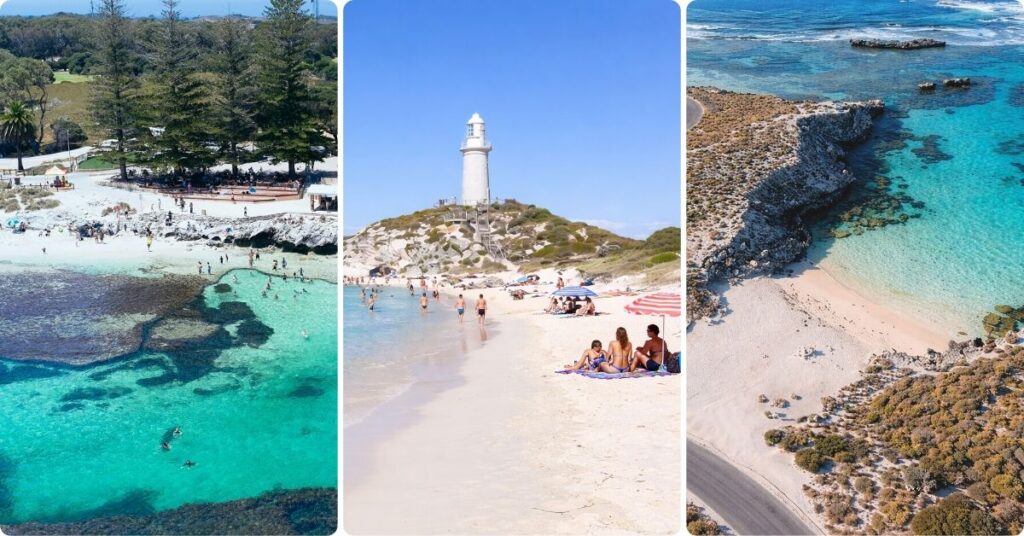
Rottnest Island Day Trip: The Basics
A Rottnest Island day trip from Perth is one of the easiest escapes from the city – but it’s easy to waste precious island time on logistics if you don’t plan ahead. We’ve spent countless ferry journeys and cycling hours across Wadjemup (the island’s Noongar name) to work out what works and what doesn’t.
This guide covers ferry costs and departure times, realistic day-trip itineraries for different traveller types, the quokka-spotting strategy that actually delivers, and the practical mistakes that most day-trippers regret. Whether you’re heading with family, a partner, or flying solo, you’ll find a template that fits.
Rottnest Island sits about 18 kilometres offshore from Perth, making it a genuine island escape without the flight. You’ll reach it by ferry from one of three departure points – Fremantle, Hillarys, or Perth City – with journeys ranging from 25 minutes to 90 minutes depending on your starting point.
The island is car-free, which sounds limiting until you realise it keeps the place calm and forces you to slow down. You’ll get around by bicycle, walking, or a hop-on-hop-off shuttle bus. Most day-trippers find that 6–8 hours on the island is the sweet spot – enough time to swim, spot quokkas, cycle a scenic route, and grab lunch without feeling rushed.
Here’s the cost reality: a Rottnest Island day trip for one person ranges from around $100–$150, while a family of four should budget $300–$400. Ferry costs dominate your spend, but if you’re strategic about which terminal you leave from, you’ll notice the difference.
Ferry Options & Pricing: Which Departure Point Suits You?
You have three main options to reach Rottnest, each with different trade-offs between speed, cost, and convenience.
Fremantle (B-Shed, Victoria Quay)
Fremantle is the budget-conscious choice. Both Rottnest Express and SeaLink depart from B-Shed (1 Peter Hughes Drive), roughly 25–30 minutes from the island. Return fares average $116, compared to $256 from Perth City. SeaLink’s weekday saver is particularly attractive: $65 return for the 7 am ferry Monday to Friday – genuine savings for early risers.
Fremantle is also 25 minutes by train from Perth CBD (or a short drive), so getting there isn’t difficult. One note: the B-Shed terminal is undergoing renovations, so allow extra time for parking and follow the terminal’s current instructions on access.
Both operators run approximately 7 services daily, with the first ferry around 7:30 am and the last around 5:15 pm. If you’re maximising island time on a budget, Fremantle is your base.
Hillarys Boat Harbour
Hillarys (north of Perth) is the middle ground – a 45-minute ferry journey with mid-range pricing between Fremantle and Perth City. SeaLink and Rottnest Fast Ferries both operate from here, and there’s ample car parking. It’s a good choice if you’re heading up the coast anyway or prefer the convenience of a northern suburb launch point.
Perth City (Barrack Street Jetty)
Leaving straight from Perth’s city centre (Barrack Street) is the most expensive option – return fares run $256 on average, with dynamic pricing meaning peak times can jump to $560. The ferry takes 90 minutes, eating noticeably into your island day. However, if maximising convenience outweighs cost, you’ll leave central Perth and save yourself a drive to Fremantle or Hillarys.
Booking Your Ferry
Book online in advance. Ferries – especially during summer school holidays and weekends – fill up quickly. Last-minute availability drops sharply from December through February. Operators include Rottnest Express (rottnestexpress.com.au), SeaLink Rottnest (sealink.com.au), and Rottnest Fast Ferries (rottnestfastferries.com.au).
Rottnest Island Admission & Transport on the Island
Once you’re ashore, you’ll pay a daily admission fee: $21 for adults, $10.50 for children (aged 4–12). This is in addition to your ferry fare.
On the island, you have three transport options:
Bicycle rental ($30–$36 adult, $18 child per day) gives you flexibility to explore at your own pace. Helmets are mandatory. E-bikes are available at a premium rate. Book ahead during peak season to avoid missing out. Pedal & Flipper also includes snorkel rental in some packages, which is useful if you plan water activities.
Island Explorer shuttle bus (Quokka Coaches) runs 15–20 minute intervals from 8:45 am to 5 pm, stopping at 19 points around the island. A daily pass costs $30 for adults. It’s perfect if you want to rest between stops or skip the cycling entirely.
Walking is free and works well for exploring the settlement and nearby beaches, though reaching distant attractions requires transport.
Many experienced day-trippers combine bike rental with a shuttle pass – cycle the scenic 4 km Mini Loop in the morning, then hop on the bus for remote areas in the afternoon when legs are tired.
Day-Trip Itineraries for Different Traveller Types
Every traveller moves differently. Here are three realistic itineraries matched to how you travel.
Family Day Trip (with Children)
Arrival & morning: Catch an early ferry to maximise island time. Head straight to The Basin or Pinky Beach – both are family-safe with clear water, gentle entry, and good snorkelling for kids who can manage it. These are busier beaches, but safer than more remote options.
Lunch: Pack a family picnic or grab lunch at a family-friendly venue like Thomson’s Rottnest, Hotel Rottnest, or Frankie’s on Rotto. Picnicking is cheaper and gives you flexibility if kids need a break.
Afternoon: Rent bikes and tackle the 4 km Mini Loop (30 minutes) as a family unit. Or use the Island Explorer bus to visit Wadjemup Lighthouse at the west end – the views are worth it, and it’s educational for kids. Before your return ferry, join the free daily guided quokka walk departing from the Salt Store building (1–2 hours) – kids love this, and it teaches respectful quokka interaction.
Transport mix: Combine bike rental with shuttle bus passes. This breaks up fatigue and keeps energy levels high.
Reality check: We realised one day doesn’t feel like enough once you’re there, but it’s definitely workable with good planning and an early ferry.
Couple Day Trip (Romantic or Active)
Arrival & morning: Catch an early ferry. Explore less-crowded northern beaches like Longreach or one of the turquoise bays further from the settlement. Swim, snorkel in clear water, or just float and take in the views.
Lunch: Book a waterfront lunch reservation in advance at Thomson’s Rottnest (classic Aussie fare with views) or Isola Bar e Cibo (Italian). Waterfront dining is the one splurge worth making on Rottnest; the backdrop of Thomson Bay and Bathurst Lighthouse is unbeatable.
Afternoon: Rent bikes and cycle the 10 km Beaches, Lighthouses, and Lakes trail (1.5–3 hours depending on stops). Stop for photos at scenic overlooks. If you have time, visit Oliver Hill – a WWII gun battery with guided tunnel tours (1–2 hours including tour) that’s quietly fascinating.
Evening: Time your return ferry to catch sunset from Thomson Bay or Pinky Beach with Bathurst Lighthouse as the backdrop.
Transport: Bike rental only – flexibility and intimacy are the point.
Solo Traveller Day Trip
Arrival & morning: Catch the 7 am SeaLink Weekday Saver ferry from Fremantle ($65 return Mon–Fri). Head to the island Visitor Centre to orient yourself, then rent a bike. The island’s well-travelled settlement area has reasonable mobile reception and feels safe to explore alone.
Lunch: Pack your lunch from a Perth grocery store before the ferry – the savings add up. Eat your picnic at a secluded beach or scenic spot. There’s no rush to coordinate with others or stick to schedules.
Afternoon: Cycle at your own pace, spotting quokkas, visiting Wadjemup Lighthouse, and exploring quieter beaches. The island feels calm and peaceful, especially if you arrive early – you’ll notice the difference in atmosphere compared to mid-morning arrivals.
Optional sunset: If you’re catching a later ferry, stay for sunset from Thomson Bay.
Cost-saving tips: Weekday Saver ferry, packed lunch, bike rental (skip pricier guided tours), free quokka walks, and lighthouse visits.
Quokka Encounters: Strategy for the Perfect Selfie
Quokkas are why most people come. These small marsupials with permanent grins are found throughout the island, concentrated around the heritage common near the settlement. They’re most active early morning and in late afternoon around 4–5 pm dusk – plan your encounters accordingly.
- Crouch or sit down to their level – they’re more likely to approach when you’re not towering above them.
- Let them come to you. Never chase or corner them.
- Use a selfie stick or phone extended for distance. You want the photo, not to handle the animal.
- Never touch or feed them, no matter how friendly they seem. It disrupts their natural behaviour and diet.
- Join the free daily guided quokka walk departing from the Salt Store building (1–2 hours). Local guides share behaviour insights and know the best spots.
What to Pack for Your Day Trip
Sun protection (non-negotiable): Reef-safe sunscreen (high SPF, broad spectrum), wide-brimmed hat, UV-protective sunglasses, and lightweight UV-blocking clothing. The sun reflects off water and sand – you’ll burn faster than you expect.
Clothing: Comfortable walking shoes, beach wear or swimming costume, and a fleece or windcheater – breezes pick up even in summer.
Hydration & food: A reusable water bottle (refill stations are available around the island). Pack lunch and snacks: a sandwich, fruit, nuts, energy bars. Food is expensive on Rottnest; picnicking is perfect with island views.
Essentials: Towel, backpack, charged camera or phone, portable phone charger, and a bike helmet if cycling – it’s mandatory.
Optional: Snorkelling gear (or rent from Pedal & Flipper), cash and cards (some vendors are cash-only).
Not permitted: Recreational drones are prohibited on the island.
Best Time to Visit Rottnest Island
Summer (December–February): Warmest season (26°C average), best for swimming and water sports, but also the busiest. Book everything in advance and consider an early ferry to beat the rush.
Spring (September–November): Mild to warm weather with calm seas. October–November brings wildflower season. Fewer crowds than summer – this is the ideal balance of weather and accessibility for most day-trippers.
Autumn (April–May): Mild temperature, quieter atmosphere, good for a relaxed pace without crowd pressure.
Winter (June–August): Cooler (18°C average), but excellent for budget visits – discounts on ferries and activities. The island feels peaceful, fewer visitors, and you might spot baby quokkas.
Practical Day-Trip Mistakes to Avoid
We’ve watched travellers make these mistakes repeatedly. Here’s how to sidestep them:
Not booking in advance: Ferry tickets, bike rental, and shuttle bus passes sell out – especially weekends, summer, and school holidays. Book online several days ahead.
Forgetting water and lunch: Dehydration and hunger cloud your experience. Pack a reusable bottle and lunch from Perth before boarding the ferry.
Underestimating time: Plan one main route rather than trying to maximise every minute. One thing done well beats five things done poorly.
Underestimating sun exposure: Apply sunscreen before you leave Perth, reapply every two hours, and wear a hat and UV shirt.
Disrespecting quokkas: They’re wild animals. Getting too close, touching, or feeding them stresses them. Crouch down, let them approach, use a selfie stick for distance.
Frequently Asked Questions
How far in advance should I book my ferry tickets?
Book online ahead of time – ferries fill up fast, especially in peak summer (December–February) and during school holidays. Last-minute availability drops sharply. Weekend bookings are also recommended to secure your preferred time slot.
What’s the cheapest way to get to Rottnest from Perth?
Fremantle B-Shed is the cheapest departure point, with return fares averaging $116 (versus $256 from Perth City). SeaLink’s Weekday Saver is the best deal: $65 return for the 7 am ferry Monday–Friday from Fremantle.
Is one day enough to see everything on Rottnest?
Yes, one day covers the main highlights. Six to eight hours on the island minimum (after ferry travel time) is recommended to avoid feeling rushed and enjoy the experience properly.
Should I bring my own food or buy on the island?
Bring lunch and snacks. Food on the island is significantly more expensive than Perth prices. Pack a sandwich, fruit, nuts, and energy snacks from a Perth supermarket before boarding. Bring a reusable water bottle – refill stations are available around the island.
Can I see quokkas and get a selfie in a day trip?
Yes. Quokkas are most active early morning and late afternoon (best around 4–5 pm dusk). Visit the heritage common near the settlement for best encounters. Crouch down to their level, let them approach, and use a selfie stick for respectful distance. Free guided walks depart daily from the Salt Store building.
What’s the best way to get around on Rottnest as a day-tripper?
Bike rental ($30–$36 adult, $18 child) gives maximum flexibility. The 4 km Mini Loop works well for families (30 minutes). The Island Explorer shuttle bus ($30 day pass) suits those who prefer not to cycle. A combination approach works well – cycling in the morning, shuttle for remote areas in the afternoon.
Are there any special day-trip tips for families with young children?
The 4 km Mini Loop is perfect for younger kids. The Basin and Pinky Beach are safe for swimming. Join the free daily guided quokka walk – it’s educational and fun. Mix biking with shuttle bus use to manage energy levels. Pack plenty of water and sun protection.
What are the most common mistakes day-trippers make?
Not booking in advance, forgetting to pack water and lunch, underestimating time constraints, underestimating sun exposure, and not respecting quokkas. Plan your itinerary, pack essentials, book transport ahead, wear sun protection, and pace yourself.
Can I reach Rottnest Island by ferry from Perth City, or is Fremantle better?
Both work. Perth City ferries (Barrack Street Jetty) take 90 minutes and cost $256 return (average). Fremantle (B-Shed) is 25–30 minutes and costs $116 return. Hillarys is 45 minutes with mid-range pricing. Choose Fremantle or Hillarys to maximise island time; Perth City if city centre access is more important than cost or time.
Getting to Fremantle from Perth
If you’re launching from Fremantle B-Shed, the easiest route is the Fremantle train line – 25 minutes from Perth CBD, frequent services, and inexpensive. For families and couples from the northern suburbs, Hillarys Boat Harbour offers a convenient launch point with ample parking.
Related Reading
For a comprehensive view of Rottnest Island’s attractions, history, and overnight experiences, read our full Rottnest Island (Wadjemup) Guide: Quokkas, 63 Beaches & Car-Free Island Life. This day-trip guide focuses on logistics and time-optimised itineraries; the full guide covers the broader island experience for those wanting to stay overnight or explore more deeply.
If you’re looking for other day-trip options from Perth, consider our guides to Bathers Beach Fremantle, Cottesloe Beach, Rockingham Beach, or Serpentine Falls in the Perth Hills.