
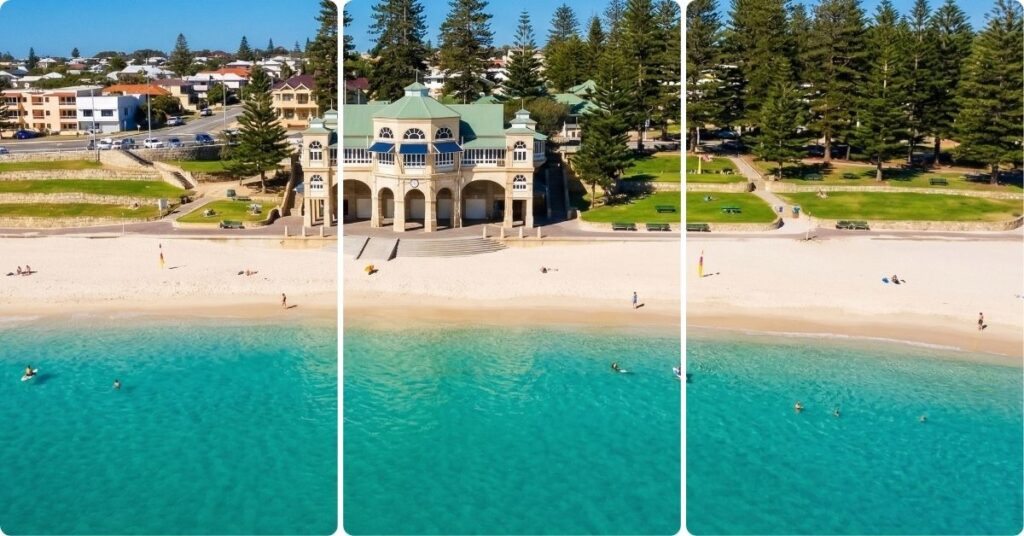
Cottesloe Beach: Where Perth Meets the Indian Ocean
There’s a moment at Cottesloe Beach when you arrive on a summer evening and the light is golden, the sand is pure white, and the water has turned the colour of unpolished turquoise. You’re standing on what TripAdvisor ranks as one of Australia’s best beaches (847 reviews, 4.6 stars), and the reason is obvious. This isn’t a hidden gem or an undiscovered corner. This is the beach Perth has loved for over 100 years, and the reason it’s still beloved is because it delivers, consistently, on the promise: world-class swimming, world-class views, and a ritualised culture of sunset-watching that feels as essential to Perth life as breathing.
Cottesloe Beach doesn’t try to be mysterious. It’s just exceptional.
What You’re Looking At: 1km of Pure White Sand and Intention
The Geography
Cottesloe Beach stretches over 1 kilometre of pure white sand along the Indian Ocean, approximately 20 kilometres southwest of Perth CBD. It’s not a secret destination. Locals know it so well they call it “Cott”, but that familiarity doesn’t diminish what it is. The beach is sheltered by natural geography, which means the water is calm and suitable for swimming almost year-round. The sand is genuinely white. The water is crystal-clear enough for snorkelling. The visibility into the ocean is the kind that makes you understand why people move to Perth.
The Facilities (Actually Matter)
Cottesloe is studded with infrastructure that works. Free public toilets. Showers. Change rooms. Picnic areas. Lifeguard towers during peak season (October–April). Shark nets. The Cottesloe Surf Life Saving Club, established in 1902, operates out of the beach and provides patrols, swimming lessons, and community programming. There’s also North Cottesloe SLSC for the northern precinct.
This isn’t incidental detail. When you visit a beach and you need a shower or a toilet, and it’s clean and nearby, that’s the difference between a good beach visit and a great one. Cottesloe understands this.
The Water Safety Story
The beach is patrolled by lifeguards during peak season (October–April) and volunteers during off-season. Shark nets are deployed. Swim between the red and yellow flags. The water quality is monitored and maintained to standard. For peace of mind, it’s a managed public space that prioritises visitor safety without making safety a show.
The Icons: Indiana Tea House and Sculpture by the Sea
Indiana Tea House
Built in 1996, the Indiana Tea House is the architectural anchor of Cottesloe Beach. Neotraditional design, beachfront location, award-winning restaurant. It’s one of Perth’s most recognisable buildings—the kind of place you see in tourism photography and assume is much older than it is because it has that timeless seaside pavilion aesthetic.
The dining experience here is upscale. Fine dining menu, ocean views, sophisticated wine list. Google rating 4.4 stars. Price range: expensive (expect $25–50 for mains). This is where couples go for special dinners. This is where families celebrate milestones. It’s also why Cottesloe has a reputation for upscale beach culture.
There are other venues on Marine Parade—Cottesloe Beach Hotel (1905, art deco architecture, 3.8 stars), Cloisters on the Beach (casual cafe, 4.3 stars)—but the Indiana Tea House is the headline attraction.
Sculpture by the Sea (March)
Every March, the beach becomes a temporary open-air gallery. 70+ large-scale sculptures by international artists are installed along the entire 1km stretch of beach, creating an outdoor art event that draws thousands. It’s free. It’s unique to Cottesloe. It’s one of Perth’s most distinctive cultural events.
The sculptures range from monumental to intimate. They’re positioned on sand, in water, and along the boardwalk. The event transforms how you walk the beach—suddenly it’s not just a beach, it’s a curated space. Social media fills with sculpture photographs. It feels like Perth showing off.
If you’re planning to visit Cottesloe and want the full experience, March is the window. Outside of March, the beach is still exceptional, but Sculpture by the Sea adds a cultural layer that’s worth scheduling around.
What to Actually Do Here
Swimming (October–April Peak, Year-Round Viable)
The water at Cottesloe is calm, clear, and suitable for swimming. Summer (December–February) is peak: warm water (24–27°C), long days, busy crowds. Autumn (March–May) is excellent: cooling water (22–24°C), smaller crowds, still warm enough for comfortable swimming. Winter (June–August) is cold (17–19°C) but manageable for swimmers comfortable with cool water and wetsuits. Spring (September–November) transitions from cool to warm.
Swimming etiquette is simple: swim between the red and yellow flags during patrolled hours. Outside of peak season, volunteer patrols operate weekends and public holidays. The beach is safe within these zones. Respect the flags.
Snorkelling
The water clarity at Cottesloe makes snorkelling viable. Reef structures, fish species, and underwater landscape are visible. A mask and snorkel from a hire shop (available near the beach) gives you access to the underwater world without major equipment. Not a world-class reef destination, but genuinely good for a casual snorkel.
Surfing and Water Sports
The beach hosts a mix of activities. Surfing happens, though Cottesloe isn’t a major surf destination (the water is too calm most days). Bodyboarding, paddleboarding, and kayaking are all viable. Water sports equipment hire is available at multiple locations near the beach. Diving is possible, though more serious diving typically happens at other Perth locations.
Sunset Watching (Ritual)
This is the cultural signature of Cottesloe Beach. Sunsets happen every evening, but Perth’s western exposure means sunsets at Cottesloe are dramatic: the sun descends into the Indian Ocean, the light turns gold and pink, and the beach fills with people watching it happen. It’s so consistent and so anticipated that it feels like a local ritual.
Many visitors time their beach visit to the sunset window: arrive late afternoon, swim or walk the beach, then settle at a cafe or restaurant for drinks as the sun goes down. Indiana Tea House, Cloisters, and other venues have capitalised on this by offering sunset dining and drinks.
It’s not unique to Cottesloe—most west-facing beaches see sunsets—but the consistency, the cultural weight, and the dining infrastructure make Cottesloe’s sunset experience distinctive.
Walking and Cycling
The beach is walkable for its entire 1km length. The coastal path continues beyond Cottesloe, connecting toward Fremantle via a dedicated cycle path. If you’re exploring Perth’s coast by bike, Cottesloe is a natural hub: cafes, facilities, and onward connections.
A beach walk at Cottesloe, especially outside of peak times, is pleasant and simple. The sand is fine enough to walk on comfortably. The beach is wide. The views are constant.
Picnicking and Beachside Time
Picnic areas dot the beach. Bring food from a Perth cafe or supermarket, settle under a tree, and spend a few hours watching the water and reading. This is a valid Cottesloe Beach experience and doesn’t require money beyond what you spend on food.
Getting Here: Train Is Genuinely Easy
Cottesloe Train Station (5-Minute Walk)
The Fremantle Line runs directly from Perth CBD to Cottesloe. Journey time from Perth Station: approximately 25 minutes. Cost: standard Perth public transport fare (A$1.50–3 depending on zone).
When you exit Cottesloe Train Station, the beach is a 5-minute walk. The path is signposted and straightforward. This is the single easiest way to visit Cottesloe Beach from Perth CBD. No driving, no parking hassle, no navigation worry.
This is also why Cottesloe is so accessible for families—you can bring kids on a train, they arrive at the beach, and you’ve avoided the stress of driving and parking.
Bus Routes 102 and 103
These buses serve the Cottesloe area and stop near the beach. Journey times vary depending on where you’re starting, but routes are available and regular.
Car Parking
On-street parking along Marine Parade and dedicated car parks near the beach are available. During peak times (summer weekends, Sculpture by the Sea in March), parking fills and can be expensive. Arriving early or using public transport is smarter during busy periods.
Cycling
The coastal cycle path connects Cottesloe to broader Perth bike networks, including toward Fremantle. If you’re cycling along the coast, Cottesloe is an obvious stop.
Combining Cottesloe with Nearby Beaches and Day Trips
Swanbourne Beach (2km South)
A 25-minute walk south along the beach brings you to Swanbourne Beach, a naturist beach. If nudist beach culture interests you, it’s adjacent to Cottesloe. Otherwise, it’s useful to know about but not necessary to visit.
Fremantle (via Train or Car)
Fremantle is 20 minutes south by train or car. Cottesloe + Fremantle is a legitimate Perth day trip: beach in the morning, then explore Fremantle’s port area, markets, cafes, and historic architecture in the afternoon. The Fremantle Line connects them directly.
Rottnest Island Day Trip
Rottnest Island ferry terminal is in Fremantle, about 8km south. Many visitors combine a Cottesloe beach day with a Rottnest ferry trip. Ferry time: 30 minutes. This requires planning (ferries have limited sailings), but it’s viable for a longer day trip.
When to Visit: Season Shapes the Experience
Summer (December–February): Peak, Hot, Busy
Water temperature 24–27°C. Warm, comfortable swimming. Peak visitor season. Crowds on weekends and holidays. Best sunsets of the year. Hot weather (28–32°C typical, can exceed 35°C). This is Perth beach season, and Cottesloe is the flagship beach.
If you want swimming and warm water and don’t mind crowds, summer is optimal.
Autumn (March–May): Sculpture by the Sea Window, Sweet Spot Weather
Water temperature 22–24°C. Still swimmable comfortably. Sculpture by the Sea arrives in March, transforming the beach into an art event. Weather is mild (20–28°C). Crowds are elevated in March (Sculpture event), then moderate afterward.
March is a must for art + beach experience. April and May are underrated: excellent weather, fewer people than summer, still warm enough for swimming.
Spring (September–November): Warming, Wildflower Season
Water temperature 18–22°C. Early spring is cool; late spring approaches summer comfort. Weather warms through the season (18–28°C). Wildflower season begins in broader Perth regions, but the beach itself is less affected. Crowds moderate.
This is a good window for visiting without summer intensity.
Winter (June–August): Quiet, Cold Water, Good Light
Water temperature 15–19°C. Cold but not prohibitive for wetsuiters. Weather mild by Perth standards (15–18°C), occasional rain, grey skies common. Lowest crowds of the year. Light is softer and sometimes dramatic after rain.
Not a peak destination season, but if you’re in Perth anyway and want a solitary beach walk, winter delivers.
Frequently Asked Questions
Is Cottesloe Beach really that good?
Yes. TripAdvisor ratings (4.6 stars, 847 reviews), decades of local affection, consistent facilities, and the cultural weight of events like Sculpture by the Sea and the sunset ritual all support the claim that Cottesloe is Perth’s flagship beach. It’s not secretly amazing—it’s openly, obviously excellent.
What’s the best time to visit Cottesloe?
October–April for swimming and warm water. March specifically for Sculpture by the Sea. Autumn (March–May) and spring (September–November) for weather and moderate crowds. Summer for guaranteed warm water and peak beach culture. Winter for quietness.
Can I really see sculptures on the beach in March?
Yes. Sculpture by the Sea runs annually in March, with 70+ sculptures installed along the beach for approximately 3 weeks. It’s free and open to the public. The event draws substantial crowds, so expect a busier beach than usual during the event period.
Where do I eat at Cottesloe?
Indiana Tea House is the flagship restaurant (fine dining, ocean views, expensive). Cottesloe Beach Hotel is 1905 art deco (historic, moderate pricing). Cloisters on the Beach is casual (breakfast and lunch, budget-friendly). Marine Parade has multiple other cafes and casual venues. You can also picnic.
Is the water safe for swimming?
Yes, during patrolled hours within the red and yellow flags. Shark nets are deployed. Lifeguards and volunteers patrol. Water quality is monitored. Outside of peak season (May–September), volunteer patrols operate weekends and public holidays. Winter water is cold (15–19°C) but swimable with thermal protection.
How do I get there from Perth CBD?
Cottesloe Train Station is served by the Fremantle Line (direct from Perth CBD, approximately 25 minutes). The beach is a 5-minute walk from the station. This is the easiest way to visit. Buses 102 and 103 also serve the area. Car parking is available but can fill during peak times.
Is Cottesloe family-friendly?
Yes. Calm waters in protected areas, excellent facilities (toilets, showers, change rooms, playgrounds nearby), multiple casual dining options, lifeguard patrols, and the Surf Life Saving Club’s swimming lessons make Cottesloe one of Perth’s best family beaches.
Can I hire water sports equipment?
Yes. Snorkelling gear, boogie boards, paddleboards, and other equipment are available for hire at locations near the beach. Fees vary; expect $15–40 per item per day.
What’s special about the Indiana Tea House?
Built in 1996, it’s architecturally distinctive (neotraditional design) and functions as Perth’s most recognisable beachfront dining venue. Fine dining menu, ocean views, award-winning chef. It’s as much a landmark as it is a restaurant.
The Closing Shot
You’re standing on the sand at 6:00pm on a March evening. The light is gold. The water is a colour that doesn’t exist anywhere inland. Around you, people are watching a large-scale sculpture catch the late-afternoon light, couples are settling at Indiana Tea House for dinner, swimmers are emerging from the water, and the Cottesloe Surf Life Saving Club in the background is moving through the rhythms it has moved through for over 100 years.
This is Cottesloe Beach. It’s not undiscovered. It’s not secret. It’s just reliably, persistently excellent: safe, well-maintained, beautiful, and culturally significant in a way that doesn’t feel forced.
You take the train home in darkness, the salt still on your skin, and you understand why Cottesloe Beach has been Perth’s constant.