
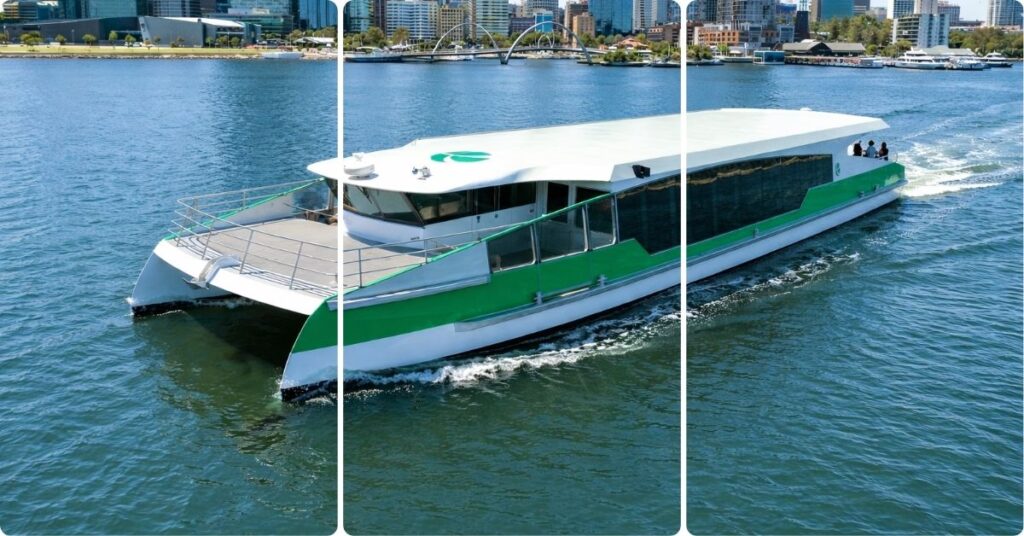
The ferry whistle cuts across the Swan River as you step onto the timber deck. Fifteen minutes later, you’re wandering South Perth foreshore or queuing for the Perth Zoo. For many visitors and locals, Perth’s ferries are the quickest escape from the CBD. For Rottnest Island seekers, they’re the only way across.
This guide covers every ferry operator servicing Perth, from the budget-friendly Transperth service to the three private operators handling Rottnest runs. We’ve included fares, booking tips, accessibility information, and real advice from travellers who’ve done the routes.
Transperth: The Swan River Local Service
If you’re planning a quick river crossing in Perth, Transperth is your operator. The service runs between Elizabeth Quay (Perth CBD) and Mends Street Jetty (South Perth) on a simple 8-10 minute schedule every 15-30 minutes throughout the day.
This is the only publicly operated ferry in the metro area, and it’s the cheapest way to get water-based transport. Three ferries rotate the route: MV Shelley Taylor-Smith, MV Phillip Pendal, and MV Tricia. All are modern, accessible, and bicycle-friendly.
Transperth Fares & Payment
Transperth pricing is built on zones, but most CBD ferries fall into Zone 1.
- Single journey (SmartRider): $1.68
- Single journey (cash): $1.87
- Daily cap: $5.20
- Weekly cap: $26.00
The real savings come with a SmartRider card. At $10 upfront plus minimum $10 load, you unlock a 10% discount on all fares. Add Autoload (direct debit registration) and you get a further 20% discount, bringing your total saving to 30% compared to cash.
Most visitors find a SmartRider worth buying even for a single trip. You can purchase cards at any Transperth InfoCentre or retail outlet across Perth. Payment is contactless: tag your card on and off at the jetty gate.
Elizabeth Quay & Mends Street Jetties
Elizabeth Quay Jetty is the modern hub. Opened in 2016 after the Barrack Street relocation, it’s a purpose-built terminal with cafes, restaurants, and ample parking. The terminal is fully accessible for wheelchairs and stroller users, with clear wayfinding and real-time timetable screens.
Mends Street Jetty sits on Mill Point in South Perth, a 11-minute walk from Perth Zoo. Many families use this route specifically to reach the zoo by water, saving them from navigating car parks.
Rottnest Island Ferries: Three Operators, Four Departure Points
Getting to Rottnest Island by ferry is straightforward once you know your options. Three operators run the routes, and your choice depends on where you’re starting, your budget, and how much time you have.
All Rottnest ferries include the Rottnest Island A-class Reserve admission fee in the ticket price, so you don’t face surprise entrance charges.
Rottnest Express
Rottnest Express is the largest operator. They run from two points: Barrack Street Jetty (Perth CBD) and B Shed at Victoria Quay (Fremantle).
Perth departures: 90 minutes, $68-$270 depending on date and booking window. They offer a premium service (9:30am departure, 4:15pm return) for $179 per person, which includes a later return slot ideal for longer island days.
Fremantle departures: 25-30 minutes, pricing lower than Perth. Fremantle is worth the drive if you’re time-poor.
Daily service runs with Wednesdays excluded on some sailings. Book online or phone 1300 467 688. During school holidays (especially December to January), book 6-8 weeks ahead; boats fill quickly.
SeaLink Rottnest
SeaLink operates similar routes to Rottnest Express, with departures from Barrack Street (Perth) and Victoria Quay (Fremantle). Journey times match: 90 minutes from Perth, 25-30 minutes from Fremantle.
SeaLink’s advantage is family packages: 2 adults and 2 children (ages 4-12) travel together at a fixed discount. They also offer bike and ferry combinations, useful if you plan to explore Rottnest on two wheels but didn’t bring your own bike.
Rottnest Fast Ferries
Rottnest Fast Ferries offers a faster service from Hillarys Boat Harbour, 25 km north of the CBD.
Hillarys to Rottnest: 40-45 minutes, $57-61. Three departures daily. Free parking at Hillarys makes this popular with families driving from the north side.
Fremantle to Rottnest: 25-30 minutes, $30-50. Cheaper than both Perth operators and slightly faster than Hillarys.
Rottnest Fast Ferries also offers a luggage delivery service. Your bags travel to your accommodation on the island while you enjoy the crossing. Arrive 30 minutes early for luggage labelling and loading.
Journey Times & Cost Comparison
| Departure Point | Journey Time | Estimated Fare | Best For |
|---|---|---|---|
| Perth CBD (Barrack Street) | 90 minutes | $68-$270 | City visitors; all-day island trips |
| Fremantle (Victoria Quay) | 25-30 minutes | $30-$50 | Speed and value; short ferry crossing |
| Hillarys Boat Harbour | 40-45 minutes | $57-61 | Northern suburbs; free parking; family-friendly |
Practical Ferry Travel Information
SmartRider: The Smart Way to Pay
If you’re using Transperth ferries more than once, get a SmartRider card. It costs $10 plus a minimum $10 load, but the savings are clear. SmartRider gives you 10% off all Transperth fares. Add Autoload and you unlock a further 20% discount, bringing your total saving to 30% versus cash. Cards are sold at Transperth InfoCentres and retail outlets across Perth.
Accessibility
All Transperth ferries accommodate wheelchairs and mobility devices. Guide dogs travel free. Most Rottnest ferries are also accessible, but requirements vary by vessel. Contact operators directly for specific needs. Rottnest Fast Ferries is noted for proactive special assistance services.
Bicycles
Transperth ferries welcome bicycles with no extra charge. Rottnest ferries permit bikes with size restrictions; tandem bikes are not allowed. Bike hire is available at Rottnest Island if you’d prefer not to transport your own. SeaLink offers bike and ferry combination packages.
Seasonal Demand
Transperth ferries operate first-come, first-served. All Rottnest Island ferries require advance booking. Peak season (December to February) fills 6-8 weeks ahead. Off-season travel (March to May, August to November) offers shorter queues and often lower fares.
Frequently Asked Questions
How do I get to Rottnest Island from Perth?
Three operators service Rottnest from Perth: Rottnest Express and SeaLink (90 minutes from Perth CBD, $68-$270) and Rottnest Fast Ferries via Hillarys (45 minutes, $57-61). Fremantle departures (25-30 minutes, $30-50) are faster and cheaper. See the full Rottnest Island Day Trip Guide for itinerary planning.
What is the cheapest way to use Perth ferries?
For Transperth (Swan River): use a SmartRider card with Autoload for 30% total discount. For Rottnest: depart from Fremantle for the lowest fares and shortest crossing. Off-season travel also offers lower prices.
Can I bring my bike on the ferry?
Yes. Transperth ferries are bicycle-friendly with no extra charge. Rottnest ferries permit bikes with size restrictions; tandem bikes are not allowed. Bike hire is also available at Rottnest Island.
How do I pay for Transperth ferries?
Use a SmartRider card (10% discount, 30% with Autoload) or pay cash at the jetty. Zone 1 single fares: $1.68 (SmartRider) or $1.87 (cash). Tag on and off at the terminal.
Can I reach Perth Zoo by ferry?
Yes. Take the Transperth ferry from Elizabeth Quay to Mends Street Jetty in South Perth. The zoo is an 11-minute walk from the jetty.
Do I need to book Transperth ferries in advance?
No. Transperth Swan River ferries are first-come, first-served. All Rottnest Island ferries require advance booking, especially during peak season. Book online or by phone (Rottnest Express: 1300 467 688).
Is the ferry accessible for people with disabilities?
Yes. All Transperth ferries and most private ferries accommodate wheelchairs, mobility devices, and guide dogs. Contact operators in advance for specific accessibility requirements.
The Future of Perth Ferries
The METRONET Swan River ferry service expansion is funding a new electric ferry fleet and extended network of routes across the Swan River, with new planned routes including Matilda Bay, Applecross, Canning Bridge, and Point Fraser. Modern electric vessels will reduce environmental impact while expanding ferry access across Perth’s river system.