
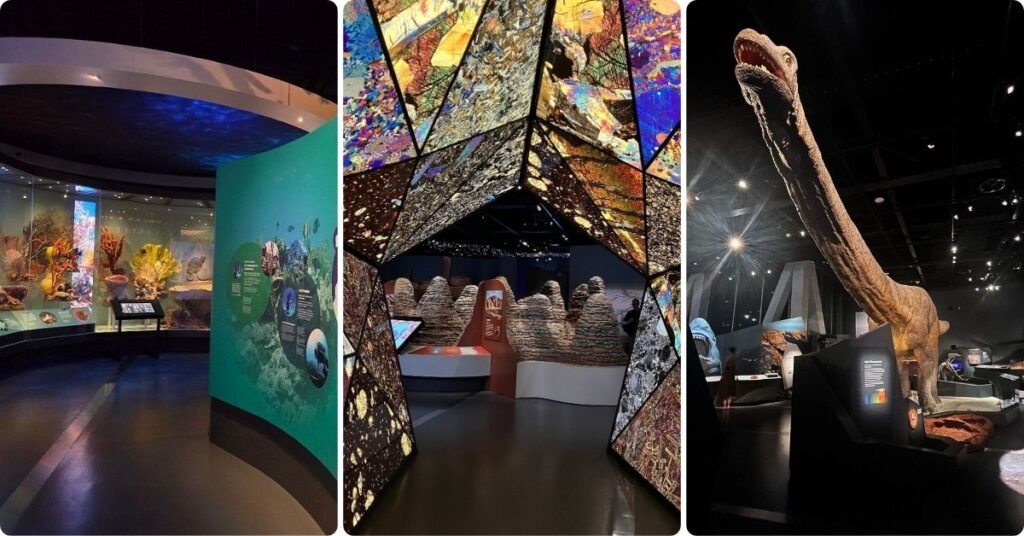
WA Museum Boola Bardip Perth: Eight Galleries of WA’s Deepest Stories
You’re standing in front of a 24-metre blue whale skeleton. Not a replica. Not a model. An actual whale—Otto—suspended in the air like something between science and sculpture. Above you, the skeleton’s ribs curve like a cathedral vault. Below your feet, the gallery floor. Around you, schoolkids are counting vertebrae. Couples are photographing the ribs. Families are experiencing the moment when Australia’s natural history stops being abstract and becomes impossible to ignore.
This is Boola Bardip. Not the Perth museum you walked past before. The Perth museum rebuilt from the ground up, opened in November 2020, designed by 54,000 West Australians who told the museum what they wanted to see. And then the museum listened.
What You’re Actually Walking Into
Boola Bardip means “many stories” in Nyoongar—the language of the people who’ve lived on this land for over 45,000 years. The museum takes that literally. Eight permanent galleries. 6,000 square metres of space. One 1,000-square-metre exhibition hall. And five heritage buildings integrated into the complex, including the Old Perth Gaol from 1855, sitting right next to the contemporary architecture like a conversation between centuries.
The real hook: entry to the permanent galleries is completely free. If you’ve paid for museums before, this feels wrong. But the WA Museum made a decision: Western Australia’s stories belong to Western Australians. So they don’t charge for the permanent collection. They charge for special exhibitions if you want them, but the core experience—the eight galleries, the whale, the dinosaurs, the minerals, the interactive exhibits—costs nothing.
That decision has consequences. TripAdvisor’s top 10% of attractions worldwide. 4.5 stars. Nearly 3,000 reviews. Not because it’s a free museum (there are free museums everywhere). But because it’s a genuinely world-class one that happens to be free.
The Eight Galleries: What’s Actually Inside
The museum was built around three major themes: Being Western Australian, Discovering Western Australia, and Exploring the World. These fold into eight distinct galleries, each designed around a different aspect of WA’s story.
First up: The natural history. Otto the whale is the showpiece, but the megafauna and dinosaur collections are the story underneath. WA is the land that hosted diprotodons (wombats the size of cars) and giant kangaroos that went extinct 40,000 years ago. The skeletons are displayed so you can see the engineering—the proportions that allowed a 3-tonne animal to move. The scale is the point.
Second: Minerals and meteorites. Western Australia sits on one of the oldest cratons on Earth. The rock collections here are genuinely extraordinary—not just because they’re rare (though many are), but because they’re positioned so you understand what you’re looking at. Specimens from the Pilbara. Meteorites that fell to Earth. Gemstones. The geology becomes a narrative.
Third: The cultural galleries. This is where the 54,000-person consultation shows. The museum worked with Noongar people, with immigrant communities, with regional WA communities to curate what “Being Western Australian” means. The result is plural. It’s not one story. It’s many stories told together.
Interactive exhibits: The museum isn’t a “don’t touch” space. There are hands-on stations, digital installations, audio experiences. Kids can engage directly with the collections. Adults can dive as deep as they want. The technology is modern (projection mapping, interactive screens), but it never feels like it’s doing the work for you. It’s there to deepen understanding, not replace it.
The Flagship Moment: Otto the Blue Whale
Every major museum has one object that becomes synonymous with the place. The British Museum has the Rosetta Stone. The American Museum of Natural History has the Blue Whale. The WA Museum has Otto.
Otto is a 24-metre Southern Blue Whale skeleton. It died off the WA coast decades ago. Someone decided: instead of storing it, display it. Make it the first thing people see when they enter the museum.
The engineering of the display is worth noticing. The skeleton is suspended so you see it from multiple angles. From some positions, it’s pure anatomy—you count the ribs, understand the respiratory system, see how the spine links the body. From other angles, it’s pure sculpture—the curves, the space it occupies, the way it commands the room.
For families, this is the moment kids stop thinking about museums as obligatory and start thinking about them as places where actual giant things are on display. For photographers, it’s Instagram gold. For the rest of us, it’s a moment where something genuinely ancient and genuinely dead becomes somehow alive in its presentation.
For Families: Interactive Exhibits and No Crowds (Off-Peak)
WA Museum Boola Bardip does family better than most museums because it wasn’t designed as an afterthought. The exhibitions include interactive stations built specifically for kids. The spaces are bright and modern. The café (Epoch, on the ground floor) is genuinely good—not a museum café that happens to serve food, but a licensed café that serves local produce, proper coffee, meals, snacks. You can settle in for an hour without it feeling like you’re overstaying.
The museum recommends 2-3 hours for a visit. That’s realistic if you’re moving at a steady pace. If you have kids and want to spend time at interactive stations, add another hour. If you’re here for deep dives into specific collections, plan for more.
Timing matters: Weekday mornings (9:30am-11:30am) are considerably less crowded than weekends and afternoons. If you’re here with small kids, this is the move. You’ll have space around the exhibits. The interactive stations aren’t queued. Otto isn’t surrounded by 50 people trying to get photos.
For a family half-day: arrive at 9:30am opening. Otto and the natural history galleries (90 minutes). Break for Epoch café and snacks (30 minutes). One more gallery or interactive stations (45 minutes). Done by 1:00pm. Kids haven’t overstimulated. You’ve actually seen something.
Getting There: The Transport Masterclass
Address: James Street Mall, Perth WA 6000
By train (best option)
Perth Train Station is a 2-minute walk away. Every Perth train line stops here: Airport, Fremantle, Mandurah, Armadale/Thornlie, Yanchep. If you’re coming from anywhere in Perth’s train network, this is the move. No parking stress. No navigation. Just arrive at the station and walk 100 metres to the museum entrance.
By free Blue CAT bus
The Blue CAT (north-south) stops right at the museum. It’s completely free. This is a genuinely good option if you’re in the CBD or nearby areas. Every 10-15 minutes during the day.
By regular bus
Multiple routes serve the area from Hay Street Bus Station. Journey times from most Perth areas: 10-20 minutes.
By car
3 minutes from the CBD. Parking is not on-site, but multiple public car parks are nearby, including the Perth Cultural Centre Car Park (directly beneath the museum). Rates vary; expect $4 per hour or around $10 for a weekend/public holiday day pass. Street parking in the surrounding area is available but can be tight during peak times.
Combine WA Museum with the Surrounding Precinct
The WA Museum doesn’t exist in isolation. You’re in Perth Cultural Centre, which is a purpose-built arts precinct.
State Library of Western Australia (150 metres, 2-minute walk): Free entry. Excellent collections. If you’re interested in WA history at a deeper level, the library’s research collections complement the museum’s exhibitions.
Art Gallery of Western Australia (300 metres, 4-minute walk): Free entry to permanent collections. If you want a full cultural day, do both the museum and the gallery. Two hours each, roughly, depending on your pace.
Perth CBD (100 metres): You’re in the city centre. Restaurants, shops, more cafes. Everything is accessible.
Kings Park & Botanic Garden (1.2 km, 15-minute walk): If you want nature to balance culture, the walk is flat and direct. You can be in the park within 20 minutes.
A realistic full day: arrive at WA Museum 9:30am. Two galleries and Otto (90 minutes). Epoch café breakfast or coffee (30 minutes). Two more galleries or interactive stations (90 minutes). Walk to Art Gallery of Western Australia (4 minutes). Spend an hour there. Lunch somewhere in the CBD or head to Kings Park. You’ve had two major cultural experiences and you’re not exhausted because neither place tried to be everything.
When to Visit: Crowds and Seasons
Weekday mornings (9:30am-11:30am): Least crowded. Best time if you’re here with young kids or prefer quieter museum experiences.
Weekday afternoons (2:00pm-4:30pm): Moderate crowds. Workable if morning doesn’t fit your schedule.
Weekends: Busiest, especially 11:00am-3:00pm. The museum is still excellent, but you’re navigating more people around the exhibits.
School holidays: Very busy. If you’re visiting with kids during school holidays, arrive early or accept that peak-time crowding is part of the experience.
Seasonal considerations: The museum is indoor and climate-controlled. Weather doesn’t affect the experience. Perth summers (35°C+) actually make spending 2-3 hours inside a comfortable option.
The Details That Matter
Accessibility: The museum has accessible parking, accessible toilets, and accessible pathways throughout. However, some visitors note that peak times can be crowded and suggest improvements in seating for those with mobility needs. Contact the museum in advance if you have specific access requirements.
Food and drink: Epoch café is on the ground level. Licensed. Good quality. Open 7 days. You can also bring your own snacks (water bottles, etc.) and eat in designated rest areas.
Gift shop: There’s a retail space on-site if you want to take home exhibition-related merchandise.
Photography: Personal photography is generally permitted in permanent galleries (check current policy before visiting). No flash photography near sensitive displays.
Booking: Pre-booking is recommended, especially weekends and school holidays, to manage crowds and entry times.
Frequently Asked Questions
Is entry really free?
Yes. Entry to the eight permanent galleries is completely free for all ages and backgrounds. Special exhibitions may charge additional fees ($5-15 typically), but the core experience is free.
How long should I spend here?
2-3 hours is standard for a moderate-pace visit of the galleries. With interactive stations, kids, or deep-dive interests, plan 3-4 hours. You can do a quick 90-minute tour if time is limited, focusing on Otto and one or two galleries.
What is Boola Bardip?
Boola Bardip means “many stories” in Nyoongar, the language of Perth’s First Nations people. The museum was designed through consultation with 54,000 West Australians and integrates their perspectives and stories throughout the exhibitions.
Is there parking?
No dedicated parking at the museum, but multiple public car parks are nearby. Perth Cultural Centre Car Park is directly beneath the museum (approximately $4/hour). Street parking is available but can be tight during peak times.
How do I get there by public transport?
Perth Train Station is a 2-minute walk away with connections to all major Perth train lines. The free Blue CAT bus stops at the museum. Regular buses from Hay Street Bus Station also serve the area.
Can I bring kids?
Yes, absolutely. The museum is explicitly family-friendly with interactive exhibits designed for children, a family-friendly café, and spacious galleries. Weekday mornings are less crowded if you’re managing young kids.
What are the opening hours?
Daily 9:30am-5:00pm. Closed Good Friday and Christmas Day. Other public holidays have varying hours (typically 1pm-5pm or 9:30am-5pm).
Is there a restaurant or café?
Yes, Epoch café is on the ground floor facing Beaufort Street. Fully licensed, serves local produce, coffee, meals, snacks. Open 7 days. There’s also a museum shop.
What makes Otto special?
Otto is a 24-metre Southern Blue Whale skeleton—one of the largest whales. The skeleton is suspended mid-gallery and is both anatomically instructive (you can study the ribs, spine, proportion) and visually stunning. It’s become the symbol of the museum.
Is the museum accessible for people with mobility issues?
Yes, substantially. Accessible parking, accessible toilets, and accessible pathways throughout. Peak crowding can be challenging; contacting the museum in advance if you have specific needs is advisable.
The Closing Shot
You’re standing in front of Otto, watching the light catch the ribs. A family is photographing from different angles. Someone’s kid is asking how big 24 metres actually is. Someone else is reading the paleontology placard about whale evolution.
This is why Boola Bardip registers as more than just a museum. It’s a space where WA’s actual history—geological, biological, cultural—becomes visible and tangible. The whale isn’t a symbol. It’s a 24-metre reminder that Western Australia isn’t abstract. It’s rock and bone and story, and all of it deserves to be preserved and presented.
Free entry. Modern design. Eight genuine galleries. A building that talks to the heritage buildings it sits next to. A café where you can actually stay for coffee. And a population of 54,000 West Australians who told the museum what their stories should look like.
Come on the train. Spend 2-3 hours. See Otto. See the dinosaurs. See the minerals. See what 54,000 people said about what “being Western Australian” means.
Then walk out into Perth’s CBD, into the cultural precinct, and understand why this particular museum matters.
It’s the kind of cultural institution that makes a city worth visiting.