
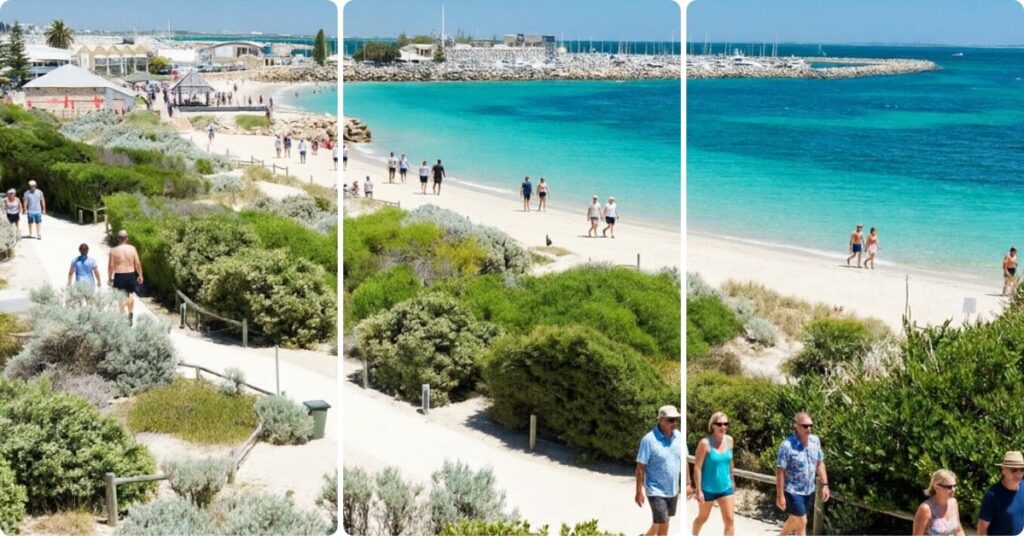
Trigg Beach: For the Surfers Who Know What They’re Doing
There are beaches where you can wade in and float on your back. Trigg isn’t one of them.
Trigg Beach is where Perth’s experienced surfer community actually goes. Not the beginners learning on foam boards. Not the families looking for a place to cool off. The people who understand reefs, respect water movement, and have done this enough times to know the difference between a workable break and a close-out.
It’s located on the northern coastal strip at West Coast Drive, roughly 15 kilometres north of Perth CBD. The beach has a distinctly local vibe and is less Instagram-heavy than nearby Scarborough, with a stronger community culture and consistently good breaks for the right skill level.
The reef breaks are the signature draw. Trigg Point is famous among the broader Australia surfing community. In winter, when Southern Ocean swells run clean and consistent, this is a destination beach. The rest of the year, it’s where experienced local surfers refine their craft.
This guide is for people who already know how to surf, and for people who want to understand what Trigg actually is rather than showing up as a casual tourist.
Beach Character: What Makes Trigg Different from Scarborough
Trigg and Scarborough are adjacent beaches. They’re not the same.
Scarborough Beach
Scarborough Beach is 500 metres south. It’s the family beach: gentler waves, sandy bottom, wider beach, plenty of young surfers learning, tourists on holiday. Nothing wrong with this. It’s a good beach. The vibe is relaxed, accessible, tourist-friendly.
Trigg Beach
Trigg Beach is the local surfer beach. Steeper beach break, reef hazards, powerful waves year-round, experienced surfers, smaller crowd but more intensive. The vibe is focused, skilled, community-oriented rather than casual.
If you’re learning to surf, go to Scarborough. If you can already surf to intermediate-advanced level and you want a legitimate reef break, Trigg is your destination.
The reef is the physical difference. Scarborough has sand bottom. Trigg has reef, which creates more powerful, more hollow, more consistent waves. Reef also creates hazards (more on this below).
The social difference is real, as Trigg has an established local community, and you’ll see the same faces here week after week. There’s a hierarchy of respect based on who knows the break best, which is a cool feature of the local culture. If you’re new, you paddle to the side, watch the experienced people take the best waves, and learn where to position yourself for the secondary breaks.
Scarborough has more of a transient energy. People come, catch some waves, leave. Trigg feels like a place where people actually belong.
Trigg Point: The Reef Break That Put Perth on the Map
Trigg Point is the reef break. It’s located at the northern edge of the beach where the coastline juts out. The break is a proper point break with waves peel off the reef in a specific direction, which means longer rides and more technical surfing than beach breaks.
Conditions at Trigg Point
When it works, it’s genuinely good. Winter swells (June–August) produce the most consistent clean waves. A proper winter swell can yield waves that rival southern Australian breaks in quality if not consistency.
When it’s crowded (which it frequently is during good swells), the situation becomes intense. The break isn’t huge and there’s only so much lineup space. During a solid swell, you might be paddling out with 50+ surfers. This is where the reef hazard becomes a social hazard with crowded water, respect dynamics, and wave prioritisation.
Wave Size and Power
Trigg Point gets big. Very big in winter. The reef amplifies swell, which means a 2-metre swell becomes a more serious wave at the point than it would be on the beach break. This is good if you’re looking for substantive waves. It’s something to respect if you’re not experienced with heavy water.
The Blue Hole
Surfers talk about “the Blue Hole” at Trigg. This is a rocky/reef formation that creates a hazard. Exact details vary by tide, swell direction, and water conditions. The point is: there are hazards beyond just surfing skill. You need to know the break or have someone who does show you the safe and unsafe zones.
Trigg Beach Main Break: The Workable Alternative
Not everyone surfs Trigg Point. Many surfers use the main beach break, which runs along the front of the beach for roughly 800 metres.
The beach break is more forgiving than the point. It’s not a reef hazard. It’s a proper sandy beach with wave formation determined by sand bars and tidal movement. Quality varies depending on sand conditions and swell direction.
When to Surf
Winter (June) is the clear winner: Southern Ocean swells, clean waves, consistent breaks. Summer can be good for body surfing and smaller waves, but the big groundswells are a winter phenomenon.
The best conditions are early morning (before wind comes up) or evening (as wind drops). Mid-day is typically choppy.
Crowd Levels
The main beach break has moderate crowding. Not Bondi-level crowded, but not empty. Trigg Point gets much fuller, particularly during good swells.
Body Surfing: A Serious Community
This is worth noting separately because Trigg has an established body surfing culture. Not boogie boarding (though that exists), it’s riding waves without equipment and using your body as the craft.
Trigg is one of Australia’s premier body surfing destinations. The reef breaks produce the kind of hollow, peeling waves that body surfers need. The community is genuine and skilled.
If you body surf, Trigg is a pilgrimage destination. If you’ve never done it, watching experienced body surfers navigate these waves is an education in pure hydrodynamics.
Snorkelling and Calm-Day Options
On smaller swell days or in late summer when ocean energy drops, the reef creates snorkelling opportunities. The reef supports fish life, visibility can be good, and if you’re comfortable with reef navigation, there are exploration possibilities.
This is not the main reason to visit Trigg. It’s a bonus option on specific conditions.
Practical Details: Everything You Actually Need
Parking
Adequate at the beach. Free parking in the Trigg suburb area (several blocks back from the beach) or paid parking closer to the sand. Standard Perth beach parking is usually not too difficult.
Facilities
Lifeguard stations, toilets, change facilities. The Trigg Island Surf Life Saving Club operates on the beach.
Access
Free public beach. Standard Western Australian beach access rules apply which include sun safety, water safety awareness, and basic respect for the ocean.
Hazards Summary
- Rocky outcrops along parts of the beach
- Reef (hazard and asset simultaneously)
- The Blue Hole (specific reef hazard at Trigg Point)
- Crowding during good swells
- Strong currents (check conditions before entering)
- Rips and other water movement hazards
Tide and Conditions
Check surf forecast sites before you go. Tide tables are essential if you’re surfing the reef (tidal movement affects break shape significantly).
Dining Nearby
Canteen Trigg is the main option. Seafood-focused, beachside views. The other very solid choice is the adjacent Trigg Island SLSC.
Equipment
Hire is available in Perth city. A wetsuit is essential June–August; optional in summer depending on your cold tolerance. A rash guard is always sensible (sun protection, minor impact protection).
Comparing to Other Perth Beaches
Scarborough
500m south: Family-friendly, sand bottom, gentler waves. Good for learning, not for experienced surfing. Better for swimming.
City Beach
West of Trigg, less dramatic, beach break. Less crowded than Trigg. Easier conditions for intermediate surfers.
Cottesloe
South of the city, completely different vibe. More touristy, calmer, better for general swimming and families.
For experienced surfers specifically, Trigg is the top choice. For everyone else, alternatives are better.
Community and Culture
Trigg Island Surf Life Saving Club is the active organization on the beach. They manage lifeguard coverage, organise community events, and are generally the institutional presence.
The broader Trigg surfer community is tight-knit. You’ll see the same people, there’s an understood hierarchy of respect based on local knowledge and skill, and there’s a genuine culture of looking after each other in water that can be serious.
If you’re new, paddle out aware that you’re entering an established community. Respect the experienced people. Don’t drop in on other surfers’ waves. Watch and learn. You’ll be welcomed.
When to Visit: Seasonal Breakdown
June–August (Winter)
Best swells, most consistent waves, peak season. Also coldest water, need wetsuit. Most crowded during good swells.
September–November (Spring)
Decent swells, warm-up towards summer conditions. Fewer crowds than winter. Still workable.
December–February (Summer)
Warm water, smaller swells, less consistent. Body surfing season. Fewer experienced surfers (they’re elsewhere). Good if you’re seeking a quieter experience.
March–May (Autumn)
Mild conditions, occasional decent swells, moderate crowds. Workable throughout.
Frequently Asked Questions
Is Trigg good for beginners?
No. Start at Scarborough or City Beach. Come to Trigg when you’re comfortably intermediate.
When are the best waves?
June (winter) consistently. Any other season depends on swell patterns — check forecasts.
How crowded is Trigg Point?
Very crowded during good winter swells. Moderate crowding on the beach break year-round.
What’s the water temperature?
15–18°C in winter (full wetsuit needed). 18–22°C in spring/autumn (3/2 wetsuit). 22–25°C in summer (rash guard sufficient).
Is it safe?
Safe if you’re experienced and respect the hazards. Not safe if you don’t understand reef dynamics or water movement.
Can I swim (non-surf) at Trigg?
Technically yes. Practically, the reef hazards and wave power make it less ideal than nearby beaches. Scarborough is safer for swimming.
Should I use a board or body surf?
Either. The waves support both. Body surfers use the hollow sections; board surfers use the longer peels. Both are legitimate.
What’s the difference between Trigg and Scarborough again?
Trigg: reef, experienced surfers, local culture, challenging conditions. Scarborough: sand, all skill levels, transient vibe, gentler waves.
Can I rent gear?
Yes, board and wetsuit hire is available from shops in Perth. Book ahead if visiting on a weekend.
How do I know if conditions are good?
Check Surfline (surfline.com) or Surf-Forecast (surf-forecast.com) for live forecasts and Trigg-specific information. Both have cameras, forecasting, and community updates.
The Closing Insight
You’re paddling out at 6:00am on a winter Tuesday. The carpark is nearly empty. The swell is clean, the wind is light, and the reef is working. There are maybe 15 surfers in the lineup and most will be people who actually live here or have come because they know this is where it happens.
This is Trigg. Not a tourist destination. Not an Instagram moment. An actual place where skilled people come to do something they understand and love.
You’re either part of this world or you’re not. If you are, Trigg matters. If you’re just looking for a beach day, Scarborough is better. But if you know reefs and respect water and want waves that reward skill, Trigg is worth the journey.