
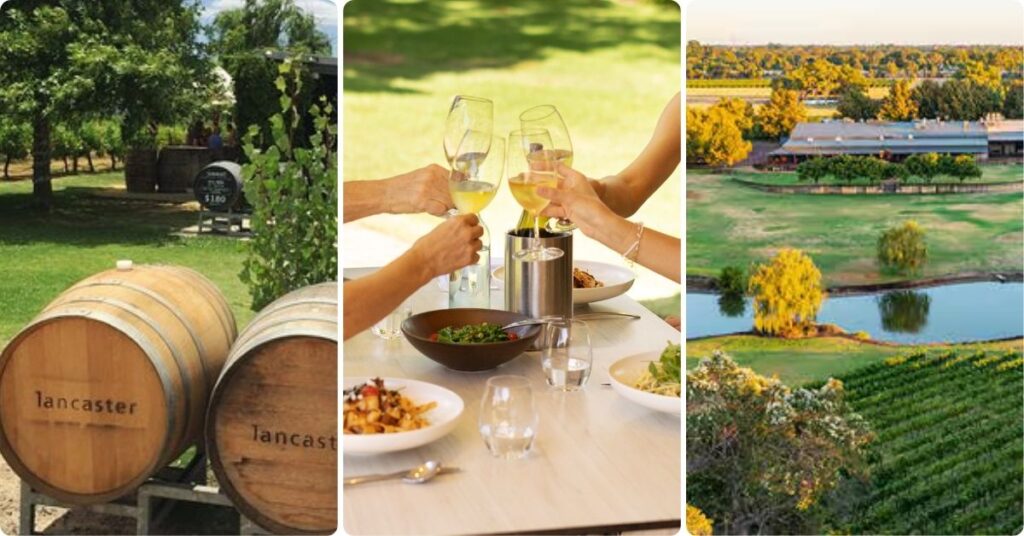
Most people come to the Swan Valley for the wine and leave talking about the kangaroo that wandered up to their picnic table. That is the secret of Western Australia’s oldest wine region. It is only 25 minutes from the Perth CBD, the vines have been producing since the 1830s, and somewhere along the way it quietly turned into one of the best full family days out in the state. You can spend the morning hand-feeding koalas, the afternoon tasting Chardonnay, and the kids can do both without a single complaint.
This guide covers the whole picture: the heritage cellar doors, the chocolate and cheese stops, the Swan River cruise option, and the part most wine guides skip entirely. Caversham Wildlife Park and Whiteman Park sit right on the edge of the valley, and for families they are the main event. Here is how locals actually structure a day in the Swan Valley, what is worth your time, and what catches first-timers out. For a full overview of every attraction category, including the distillery trail, see our Swan Valley attractions guide.
Swan Valley Perth Snapshot
| Feature | Summary |
|---|---|
| Known For | WA’s oldest wine region, family wildlife encounters, food and wine trail |
| Distance from Perth | 25km north-east, about 25–30 minutes by car |
| Best For | Wine lovers, families, food trail explorers, day trippers |
| Time Needed | Half to full day (full day if combining wildlife and wine) |
| Atmosphere | Rural, relaxed, unhurried |
| Kids Friendly | Yes, especially via Caversham and Whiteman Park |
| Best Seasons | Spring (Sep–Nov) and autumn (Mar–May) |
| Cost Range | $80–$150pp for a wine day; about $108 family entry at Caversham |
Who It Suits
The Swan Valley wears two hats, and which one fits depends entirely on who is in the car.
For couples and groups of adults, this is a relaxed wine and food day. Two or three cellar doors, a long winery lunch, a few gourmet stops for chocolate and cheese, and you are back in Perth by late afternoon. No need to leave WA to feel like you have had a proper wine country escape.
For families, the valley is something different and frankly better than most parents expect. Caversham Wildlife Park and Whiteman Park sit on the northern edge of the region and deliver one of Perth’s strongest family days: native animals you can actually touch and feed, heritage trams, a genuine Formula 1 car, and 17km of car-free cycling paths. Pair a morning of wildlife with lunch at a winery that has a kids’ play area and you have kept everyone happy in one trip.
Who might want to look elsewhere? If you are chasing a big-name, cellar-door-dense wine region with the polish of the Barossa or Margaret River, the Swan Valley is smaller and more low-key. And if you want a cycling wine trail where you pedal between cellar doors, this is not it. The wine corridor is a drive trail, and we will be honest about that further down.
What Swan Valley Is
The Swan Valley is not the Barossa and it is not Margaret River. It is a warm, semi-arid wine region that produces surprisingly good cool-climate wines thanks to afternoon breezes and careful viticulture. It sits on the Swan River plain with the Darling Range to the east: rural, but actively and skilfully worked rather than remote.
It exists because in 1836 someone planted grapes. That someone was Houghton, established that year and still operating on the original site. Sandalford followed in 1840. The region has produced wine more or less continuously for nearly 200 years, and these days the wineries come with restaurants, breweries, galleries and play areas. Wine tasting is the core, but it is far from the only reason to come.
The Wineries: Where You Actually Taste
There are around 40 wineries in the Swan Valley. You will not visit all 40 in a day. You will visit two to four, depending on your pace and whether you are including food. These three matter most for first-time visitors.
Sandalford Wines
Sandalford Wines is the grand estate. Established in 1840 and still operating on the original Caversham site, it is genuinely impressive: old stone buildings, landscaping refined over 180 years, and the visual coherence that comes from real longevity. The tasting experience is traditional. You walk through the cellar, learn how the wine is made (they take this seriously), and taste a range from approachable to serious. The restaurant is excellent, with seasonal, locally sourced, wine-matched food. This is the place to do lunch, and there is a play area on the grounds, so it works for families too. Reserve ahead on weekends.
Houghton Wines (Nikola Estate)
Houghton Wines, now Nikola Estate, is the heritage heavyweight. Established in 1836, older than Sandalford, and it feels it. Towering old gums give the grounds a gravitas that only genuine age produces. The tasting room is more casual than Sandalford’s, which suits you if you are moving quickly between venues. Houghton’s strength is accessibility: the wines are excellent, the experience is unpretentious, and you can do a proper tasting in 45 minutes without feeling rushed. A good second stop.
Mandoon Estate
Mandoon Estate is the modern option, designed as a full-day destination: winery, the Wild Swan restaurant (serious fine dining), Homestead Brewery, a gallery, a kids’ playground and a river lawn. If Sandalford and Houghton are heritage experiences, Mandoon is the contemporary statement. The brewery means you can do wine and beer in one venue, and the play area and lawn make it one of the easiest spots in the valley for families. Good as the main stop of your day.
Caversham Wildlife Park: The Family Highlight
If you are travelling with kids, this is the reason to come to the Swan Valley, full stop. Caversham Wildlife Park sits inside the Whiteman Park Village precinct on the valley’s northern edge, and it packs more than 2,000 animals across 200 species into one family-run park. It receives no government funding, and yet it does something almost no comparable attraction manages: every show, every keeper talk, every photo session and all the animal food are included in the one entry price. There are no awkward upsell signs once you are inside.
As one family put it after a visit, “we loved that the animal food and all the shows were included, no awkward moments standing at an extra charge sign.” That all-inclusive model is the single thing visitors mention most.
The kangaroos roam free and you can hand-feed them throughout the day (9:00am–5:30pm), with food handed to you on the way in. The koalas run in two daily sessions, mornings 10:00am–1:00pm and afternoons 2:30pm–4:30pm, with photo sessions included and a limited number of holding sessions where you can actually cuddle one. Wombat and Friends runs at 11:00am, 2:00pm and 3:45pm, bringing out wombats, pythons, lizards and friendly birds for a hands-on encounter. There are Tasmanian devils, penguins, and Molly’s Farm, where the Sheep Dog Show at 10:00am, 1:00pm and 3:00pm delivers whip-cracking, sheep-shearing and billy-swinging that genuinely lands with kids.
Entry costs $37 per adult, with children (aged 3–14) paying $17, which puts a family of two adults and two children at roughly $108. The park is open daily 9:00am–4:30pm, last entry 3:30pm, and closes only on Christmas Day. Allow three hours minimum to catch the key shows without rushing, and more on weekends and school holidays.
Two practical warnings. First, there are no water fountains inside the park, so bring your own water, especially in summer. As one visitor learned the hard way, “bring your own water, there are no drinking fountains inside and it gets hot.” Second, koala holding sessions are limited and book out fast in school holidays. If holding a koala is the moment your kids are dreaming about, book ahead by phoning (08) 9248 1984. General admission does not need a booking, but the koala cuddle does.
Whiteman Park: More Than a Wildlife Stop
Caversham sits inside something much bigger. Whiteman Park is a 4,000-hectare reserve 28km from the CBD, officially listed as a Swan Valley attraction, and it is free to enter, open every day 8:30am–6:00pm with free parking. It contains more paid-attraction variety per square kilometre than almost anywhere else in Perth, and most of it is gloriously affordable.
Motor Museum of WA
The second-largest motor museum in Australia holds more than 200 vehicles, from a 1912 Model T to the southern hemisphere’s largest display of scale model cars. The headline exhibit is Daniel Ricciardo’s 2014 Red Bull RB10, the car he won his first F1 race in. It pulls in visitors who would not normally set foot in a museum. As one parent put it, “the kids had no idea who Daniel Ricciardo was but they lost their minds at the F1 car. We spent twice as long there as we planned.” Entry is $17.50 per adult, $8 per child, or $40 for a family pass. Allow one to two hours.
Heritage Trams, Trains and Museums
Whiteman Park is the only place in WA to ride a genuine heritage electric tram, a 4km route with conductor-issued paper tickets and kangaroos often visible from the window. Tickets are $6 per adult and $3 per child, running Tuesday, Friday, Saturday, Sunday and daily during school holidays. One honest caveat: the trams cannot run during a Total Fire Ban or extreme heat, so on a hot summer day you will want a backup plan. Call ahead to confirm. Beyond the trams, the Revolutions Transport Museum runs on entry by donation (with a new sensory-friendly Quiet Hour from March 2026), and the Tractor Museum charges $5 for adults with under-16s free.
Cycling Paths and Pedal Go-Karts
This is where the cycling question gets answered. There is no cycling wine trail through the Swan Valley wineries, and we will be upfront about that below. The cycling here lives at Whiteman Park, which has nearly 17km of sealed, car-free shared paths winding through bushland where kangaroos graze beside the track. One family summed up the appeal: “we weren’t expecting kangaroos just grazing on the path while we cycled past, that kind of thing is hard to find 30 minutes from the city.” Bring your own bikes, or for younger kids, hire a pedal go-kart from Pedal Play ($20–$45 per hour, weekends and school holidays only). The path network even connects to Whiteman Park Train Station on the Ellenbrook line, so car-free families can ride in from the city. For more routes across the city, see our guide to cycling in Perth, and for the full rundown on the reserve itself, our Whiteman Park guide goes deeper.
The Food Trail: Beyond Wine
This is where the Swan Valley becomes more than a wine region. The food trail is designed so you are never more than 10–15 minutes from the next stop, and each one resets your palate between tastings.
The Margaret River Chocolate Company in West Swan is the obvious one: artisan chocolate, free to browse and taste, perfect as a 20-minute palate cleanser. Through June 2026 it is running a Rocky Road Festival with six varieties to sample. Beyond chocolate, the valley has specialist nougat makers, boutique cheese producers, and apiaries like House of Honey selling local honey and bee products. None of these are major destinations on their own, but stitched together they turn a wine drive into a proper grazing day. Families should also note the free, downloadable Swan Valley scavenger hunts (the Great Valley Rally and Amazing Valley Chase), which turn the drive between stops into an interactive adventure for kids.
Swan River Cruises: Optional Enhancement
Some operators run wine-tasting cruises from Perth up the Swan River into the valley. These are full-day experiences (typically 10:00am–4:00pm) that include transport, food, wine and commentary, and they cost from around $170 per person. They work well if you do not want to drive, if you want a social group environment, or if you would rather have the day designed for you. They are legitimate experiences, not tourist traps. They are also optional. A self-drive day is more flexible, cheaper, and lets you linger as long as you like at each venue.
Two Perfect Swan Valley Days: Hour by Hour
The valley really has two days inside it, depending on who you are travelling with. Here is how to structure each.
The Family Day
The optimal family formula combines wildlife in the morning with a winery that has a play area for lunch, so the adults get their wine and the kids stay entertained.
- 9:00am: Arrive at Caversham Wildlife Park as kangaroo feeding opens. Work through the farmyard, the Sheep Dog Show and the 11:00am Wombat and Friends session.
- Midday: Drive 10–15 minutes into the wine corridor for lunch at a family-friendly venue (Mandoon Estate, Sandalford or Bailey Brewing all have play areas).
- 2:00pm: Head back to Whiteman Park for the Motor Museum and the F1 car, or a pedal go-kart session on the paths (weekends and school holidays).
- 4:00pm: Drive back to Perth, about 30 minutes.
Budget around $148 for Caversham plus the Motor Museum for two adults and two children, before food.
The Wine and Food Day
- 9:30am: Depart Perth CBD.
- 10:00am: Arrive at Houghton or Sandalford. Taste for 45 minutes, then explore the grounds.
- 11:00am: Gourmet food stop for chocolate or nougat, about 15 minutes.
- 11:30am: Drive 20 minutes to a second winery (Sandalford or Mandoon).
- 12:30pm–1:45pm: Long lunch at the winery restaurant. This is the centre of the day.
- 2:00pm: Optional brewery, gallery or third tasting, about 45 minutes.
- 2:45pm: Cheese or honey stop, about 15 minutes.
- 3:15pm: Drive back toward Perth, arriving by around 4:00pm.
What Locals Know
The first thing locals understand is that Whiteman Park and the wine corridor are two distinct areas, 15–20 minutes apart by car. Visitors who picture one contiguous district end up frustrated. Plan your day in two parts and it flows; expect to stroll from a cellar door to a koala enclosure and you will be back in the car more than you bargained for.
Locals also know that the family wineries are the smart play even for adult groups with kids in tow. Mandoon, Sandalford and Bailey Brewing all have play areas, which buys parents an actual sit-down lunch with a glass of wine rather than a rushed one. And the genuinely free wins, the kangaroos on the Whiteman paths, the Sheep Dog Show, the bush walking trails, often leave a bigger impression than the paid attractions.
One more piece of timing intelligence: school holidays transform Caversham and Whiteman Park. The koala holding books out, the Wombat and Friends sessions fill, and the car parks get busy. If you can visit on a weekday outside the holidays, you will have far more room to move. The trade-off is that the trams and pedal go-karts run on a reduced weekday schedule, so check what is operating before you go.
Trade-offs and Honest Limitations
No destination is all upside, and the Swan Valley has a few honest catches worth knowing before you commit a day to it.
- There is no cycling wine trail. The wine corridor is a drive trail, and West Swan Road is not separated from traffic, so it is not family-friendly riding. Real cycling means Whiteman Park’s internal paths.
- Whiteman Park and the wine corridor are 10–20 minutes apart. You cannot treat the wildlife and the wineries as one walkable area.
- Caversham has no water fountains inside. Bring your own, particularly in summer.
- Koala holding is limited and sells out in school holidays. Without a booking, there is no guarantee.
- The heritage trams cannot run during fire bans or extreme heat. On hot days, have a backup plan.
- Summer (especially January) brings 35–40°C heat that makes outdoor tasting and animal feeding uncomfortable.
Is It Worth It?
For families, the Swan Valley is one of the best-value days out in Perth, and the answer is an easy yes. Caversham alone justifies the drive, and pairing it with Whiteman Park and a family winery gives you a full day where kids and adults are equally well served. Few places 30 minutes from a capital city let you feed a kangaroo, hold a koala, ride a heritage tram and see an F1 car before lunch.
For wine-focused couples and groups, it is also worth it, with one caveat. Treat it as a relaxed, low-key wine country day rather than a Margaret River or Barossa equivalent. The heritage at Houghton and Sandalford is real, the food is excellent, and the proximity to Perth makes it the easiest wine escape in the state. Just go in expecting charm and ease rather than scale.
The one group who should think twice: anyone hoping to cycle between cellar doors. That experience does not exist here. Everyone else will find a day well spent.
Practical Details
| Detail | Information |
|---|---|
| Distance from Perth CBD | 25km north-east, about 25–30 minutes via Guildford |
| Caversham Wildlife Park | Daily 9:00am–4:30pm (last entry 3:30pm). $37 adult, $17 child (3–14) |
| Whiteman Park | Daily 8:30am–6:00pm. Free entry, free parking |
| Motor Museum of WA | $17.50 adult, $8 child, $40 family. Open daily 10:00am–4:00pm |
| Heritage tram | $6 adult, $3 child. Tue/Fri/Sat/Sun and school holidays |
| Winery tasting fees | $5–$10, often waived with a purchase |
| Winery lunch | $20–$60 per main depending on venue |
| Wine day total | $80–$150 per person including lunch and tastings |
Getting There
Self-drive is the standard approach, roughly 30 minutes from the CBD on a straightforward route. You will need a designated driver for a wine day. Organised wine tours run from Perth for around $80–$120 per person and are a good call if everyone wants to drink, though they are less flexible than driving yourself. Public transport is minimal for the wine corridor, but Whiteman Park is now reachable by train via Whiteman Park Station on the Ellenbrook line, a genuine option for car-free families heading to Caversham. See our complete guide to Perth public transport for journey planning.
Frequently Asked Questions
How far is Swan Valley from Perth?
About 25 kilometres north-east of the Perth CBD, or 25–30 minutes by car via Guildford. It is close enough to do a morning of wineries or wildlife and be back in the city by mid-afternoon, which is exactly why it works so well as a day trip.
Is Swan Valley good for families with kids?
Yes, and it is genuinely one of Perth’s best family days. Caversham Wildlife Park lets kids hand-feed kangaroos and meet koalas, wombats and Tasmanian devils, with all shows and animal food included in entry. Whiteman Park adds heritage trams, a Formula 1 car at the Motor Museum, and 17km of car-free cycling paths. Several wineries, including Mandoon and Sandalford, have play areas so parents can enjoy lunch.
How much does Caversham Wildlife Park cost?
Entry is $37 per adult and $17 per child aged 3–14, putting a family of two adults and two children at roughly $108. The price includes every show, keeper talk, photo session and all the animal food, so there are no hidden extras once you are inside. Remember to bring your own water, as there are no fountains in the park.
Can you cycle the Swan Valley wine trail?
Not really. There is no dedicated cycling wine trail through the cellar doors, and West Swan Road carries traffic with no separated bike lanes, so it is not suited to casual or family riding. The best cycling in the region is inside Whiteman Park, which has nearly 17km of flat, sealed, car-free paths where you will often spot kangaroos. Bring your own bikes, or hire a pedal go-kart for younger children on weekends and school holidays.
Can you combine wineries and Caversham in one day?
Yes, and it is the formula most local families use. Spend the morning at Caversham (allow three hours), then drive 10–15 minutes into the wine corridor for lunch at a winery with a play area. Just remember the wildlife parks and the wine corridor are 15–20 minutes apart, so plan the day in two parts rather than expecting to wander between them on foot.
When is the best time to visit Swan Valley?
Spring (September–November) and autumn (March–May) are ideal, with mild, dry weather and spring wildflowers. Avoid peak summer, especially January, when 35–40°C heat makes outdoor tasting and animal feeding uncomfortable and can shut down the heritage trams. Weekdays outside school holidays are quieter at Caversham and Whiteman Park, though some attractions run reduced midweek hours.
What wine should I expect in the Swan Valley?
Cool-climate whites, particularly Chardonnay and Semillon, are the regional strength, helped by afternoon breezes. Shiraz and other reds are good too, and quality ranges from approachable to serious across the cellar doors. You will find excellent value, especially given how established these wineries are.
The Closing Thought
Picture it late in the afternoon. The kids are quiet in the back seat, worn out from feeding kangaroos and losing their minds over an F1 car, and you are driving back toward the city with a couple of bottles of Chardonnay clinking in the boot. That is the Swan Valley at its best: a wine region that quietly became a family region without losing either identity. It has been working for nearly 200 years, and the trick is simply showing up and letting it do what it does well. When you are ready to plan the next outing, our Whiteman Park guide covers the wildlife side in full.