

Stand on the Shoalwater foreshore, 45 minutes south of Perth, and Penguin Island barely registers on the horizon: 660 metres offshore, 12.5 hectares of limestone and low scrub, tucked inside the Shoalwater Islands Marine Park. It looks unremarkable from the beach. It isn’t. This is one of the few places in the world where you can stand a few metres from a wild little penguin, Australian sea lions haul out on its rocks, and dolphins work the channel between here and the mainland most mornings.
It’s also, right now, a place going through a difficult chapter with the little penguin colony that gave the island its name having collapsed by roughly 90 percent since the mid 2000s, and ferry disruptions layered on top of the normal winter nesting closure.
None of that makes Penguin Island less worth visiting. It makes it worth visiting with the right expectations, the right season, and a habit of checking the operator’s website the week before you go, because conditions here change faster than most Perth attractions.
What Penguin Island Actually Is
Penguin Island is a government-managed conservation park within the Shoalwater Islands Marine Park, reached from the suburb of Shoalwater on Rockingham’s coast, about 45 km (a 40 to 60 minute drive depending on traffic) south of the Perth CBD.
It’s been a public reserve since the old holiday-shack leases were bought out in 1987, and before that it had one eccentric resident: a New Zealander named Seaforth McKenzie, who squatted on the island from 1914, carved out cave rooms as a makeshift resort, crowned himself “King of Penguin Island,” and eventually just walked out on his own family back home for 45 years. The island still carries traces of his caves near a fig grove on the eastern side.
Today the drawcards are the wildlife (little penguins, sea lions, pelicans, ospreys and migratory bridled terns), the boardwalk network through coastal heath and lookouts, and the sheltered swimming beach on the island’s front. There’s no shop and no food for sale on the island itself, so pack what you need or buy from Pengos Café on the mainland before you cross.
The Penguin Population: What’s Actually Happened
To be blunt, and tits the topic of much debate in Perth, is that the little penguin colony on Penguin Island has crashed. Population estimates, from the City of Rockingham and Department of Biodiversity, Conservation and Attractions (DBCA), put the colony at around 1,600 birds in 2007; by 2024, survey estimates had it down to roughly 100 to 150 birds, a decline of somewhere around 90 percent. The causes cited by researchers and the state government include warming sea temperatures reducing the small pelagic fish the penguins feed on, disturbance from rapidly increased visitor numbers to the island through the 2010s, and pressure from predators. In response, the WA Government has introduced hard visitor protections with the island closed to the public on any day forecast at 35°C or above, and also during nesting season (winter, from the day after WA Day through to around 15 October).
The mainland Discovery Centre that used to sit near the ferry terminal, the one with the touch table of shells and bones that generations of Perth kids grew up poking at, closed in 2023 after a proposed $3.3 million rebuild was shelved amid local opposition and the declining penguin numbers. The ferry operator, Rockingham Wild Encounters, is now pushing for a replacement Discovery Centre on the mainland rather than on the island itself, arguing it would reduce disturbance to the colony while still building public support for the conservation effort. As of mid 2026, that centre hasn’t been built.
None of this means you won’t see a penguin. It means the island’s real story now is conservation in real time rather than a guaranteed wildlife spectacle, and that’s probably the best way to frame the visit, especially for kids.
Getting There and Access Status
The only sanctioned way onto the island is the ferry run by Rockingham Wild Encounters (trading as Penguin Island / Perth Wildlife Encounters) from their terminal at 153 Arcadia Drive, Shoalwater. It’s a five-minute crossing. Access is tide-dependent even in season, and the service has had a rocky run since 2025: extended closures due to jetty safety concerns kept the ferry out of action for stretches of that year, and even when it’s technically “in season,” current departures have in some periods been limited to weekends rather than daily. Because this keeps shifting, confirm on penguinisland.com.au or by calling (08) 9591 1333 the week of your visit.
General seasonal pattern: the island is open to visitors from around 15 October through to the day after the WA Day public holiday (early June), then closed for the winter nesting season until mid October. Within that open season, the island is closed on any day forecast 35°C or hotter, closed on Christmas Day, and access on any given day still depends on tides.
Do not attempt the sandbar crossing or swim across. A sand spit is exposed at low tide and it’s a temptation, especially after reading old traveller reviews suggesting it as a free shortcut, but DBCA’s own safety advice is unambiguous: currents and rip conditions around the sandbar are unpredictable, water depth changes quickly, and people have drowned attempting the crossing. The ferry is the only advised way across. If you’ve got a boat licence and want to explore the marine park independently, a private vessel is a legitimate option, but the sandbar on foot isn’t.
Getting to the terminal from Perth
By car: allow 40 minutes to an hour via the Kwinana Freeway, depending on traffic. Free parking is available at the visitor centre with overflow at the Safety Bay Bowling Club (130 Gloucester Crescent). Don’t leave valuables visible; car break-ins in the car park are a known local problem.
By public transport: take the Mandurah line train to Rockingham Station, then bus 551, 552 or 553 (these depart Perth Station from stands 9 or 10 and also connect from Rockingham Station) and get off on Penguin Road, then walk toward the beach. Plan your journey on the Transperth Journey Planner, since bus routing around Rockingham gets adjusted periodically. More on Public Transport in Perth.
What a Visit Involves
Standard tickets (from roughly $23, or around $30 including a guided penguin feeding session, though confirm current pricing before booking) get you the return ferry crossing and access to the boardwalk network. Return ferries typically run from around 10:05am to 2:15pm, with the last visitors off the island by 4pm; you don’t need to book a specific return time, just check in for your outbound crossing. Reservations desk hours are roughly 9am to 3pm, and online bookings close two hours before departure, so this isn’t a same-morning walk-up in peak season without checking availability first. Ferry tickets can be purchased direct from penguinisland.com.au.
On the island itself there is a network of timber boardwalks leads through coastal heath to lookouts rated among WA’s better short nature trails, past nesting seabird colonies (especially lively September and October, when chicks are hatching close to the boardwalk), and down to a sheltered swimming beach on the island’s northern side that’s good for young kids, shallow and calm. The pelican rookery is visible year round. Humpback whales are sometimes spotted from the island’s southern lookout between September and December. King skinks, a large, confiding native lizard, are common along the boardwalks and one of the more reliable wildlife sightings on the island.
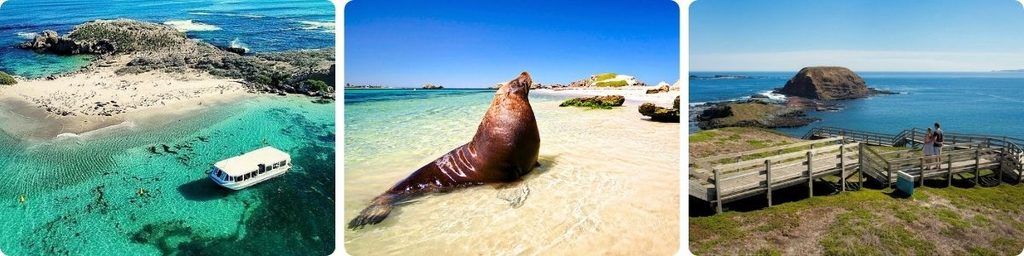
If ferry access to the island itself is unavailable when you visit (check before travelling), Perth Wildlife Encounters still runs its 60-minute Dolphin, Sea Lion and Penguin Island wildlife cruise most days, which loops past the island and Seal and Bird Islands without landing, and reliably finds dolphins (the operator cites an approximately 99 percent sighting rate) plus sea lions and pelican rookeries from the water. It’s a solid fallback and a good outing in its own right, not just a consolation prize.
What Locals Know
Rockingham locals treat Penguin Island as a school-holiday standby rather than a bucket-list day trip, which means weekday mornings outside school holidays are noticeably quieter than weekends. The afternoon sea breeze off Shoalwater Bay (“the Fremantle Doctor’s” southern cousin) picks up reliably from early afternoon and it gets cold on the water even in summer, so a windproof layer for the boat trip is a common local tip, not just operator caution. Regulars also warn that car break-ins in the Arcadia Drive car park and overflow lot are a recurring, if low-level, problem: leave nothing visible in the car.
Locals frustrated by the ferry disruptions since 2025 have increasingly used the wildlife cruise as their default option rather than waiting on the ferry timetable, since it runs more consistently and still delivers dolphins and sea lions. There’s also visible local frustration, aired regularly on Rockingham community Facebook groups and in coverage from the local paper, the Sound Telegraph, about how long the jetty and access issues have dragged on, and concern that without a resolved ferry service, more visitors will be tempted to try the sandbar crossing DBCA explicitly warns against.
Combine It With Rockingham
Because the island visit itself runs two to four hours depending on how much you linger, most people build a half-day around it rather than a full one. The Rockingham foreshore, a short walk or drive from the terminal, has an easy walking path, beach and picnic areas worth an hour either side of your crossing. Rockingham’s town centre has cafes and lunch options if you’d rather not rely on Pengos Café at the terminal. Point Peron, a scenic limestone headland a short drive south, is a good add-on for an afternoon walk with sweeping views back across the marine park.
A realistic plan: leave Perth by 8am, arrive Shoalwater around 9am, cross to the island for a 10am to midday visit, lunch in Rockingham early afternoon, then either Point Peron or the foreshore before heading back to Perth by late afternoon.
Is It Worth It?
Yes, with the caveat that you go in informed rather than expecting a guaranteed penguin spectacle. The wildlife on offer, sea lions, dolphins, pelicans, migratory terns and a rare wild penguin colony, is real and close-up in a way few Perth attractions can match.
Families with primary-school-age kids get the most out of a standard visit: the ferry crossing is five minutes, the boardwalks are flat and manageable with a pram, and the guided wildlife walk is pitched at a general audience. Snorkellers and kayakers who want a wildlife encounter beyond the standard tourist loop will want to book the 3 Island Wildlife Snorkel or a guided sea kayak tour rather than the plain ferry crossing. If your priority is a guaranteed penguin sighting on a fixed date, temper expectations as the wild colony is small, nocturnal in its return-to-shore habits, and not staged for visitors the way a wildlife park would be.
Do keep in mind that the access situation has been unusually unstable since 2025, and the population story is sobering rather than purely charming. Treat it as a conservation-minded wildlife outing with a real chance of penguin sightings, not a sure thing, confirm ferry status before you drive down, and have the wildlife cruise as your backup plan.
Frequently Asked Questions
Will I definitely see a penguin?
No guarantee. The wild colony is down to roughly 100 to 150 birds and they’re most visible around dusk as they return from fishing, which doesn’t always align with day-visit hours. Guided wildlife walks are built to maximise your chances, but this isn’t a wildlife park with a set feeding show.
Why has the population dropped so much?
Researchers point to warming sea temperatures reducing the small fish the penguins rely on, disturbance from a sharp rise in visitor numbers through the 2010s, and predation. The state government’s response includes closing the island on 35°C-plus days and enforcing the winter nesting closure strictly.
Is the sandbar crossing safe?
No. DBCA’s official advice is not to attempt it under any circumstances; currents and depth change quickly and there have been drownings. Use the ferry.
Is there still a Discovery Centre?
The old one at the terminal closed in 2023 after a planned rebuild was shelved. The operator is advocating for a replacement centre on the mainland, but as of mid 2026 it hasn’t been built.
What should I bring?
Comfortable closed or sandal-style footwear for the boardwalks, sun protection (hats and sunscreen; there’s little shade), a warm windproof layer for the boat even in summer, swimmers if you plan to use the island’s sheltered beach, and your own food and water, since there’s nothing for sale on the island itself.
Can kids and prams manage it?
Yes. Prams and standard wheelchairs are welcome on the ferry and glass-bottom boat, and the boardwalk network is generally accessible, though gloves are recommended for anyone pushing manual wheelchair wheels over the timber sections.
What’s the best time of year to go?
September and October, just after the nesting season reopens, for the best combination of active seabird nesting, pelican rookeries and (later in the window) migratory bridled terns returning from Borneo. Whale watching from the southern lookout runs September to December.
My Final Tips
Penguin Island is smaller and more fragile than it used to be, in the most literal sense: fewer penguins, a shuttered Discovery Centre, and a ferry service that’s had a hard couple of years. It’s still one of the more distinctive short trips out of Perth, sea lions and dolphins in the same outing as a wild, if diminished, penguin colony, and a rare chance to watch a real conservation effort playing out rather than reading about one. Check access before you drive down, book the wildlife cruise as your fallback, and go with realistic expectations about the penguins. What’s left is still worth the trip.