
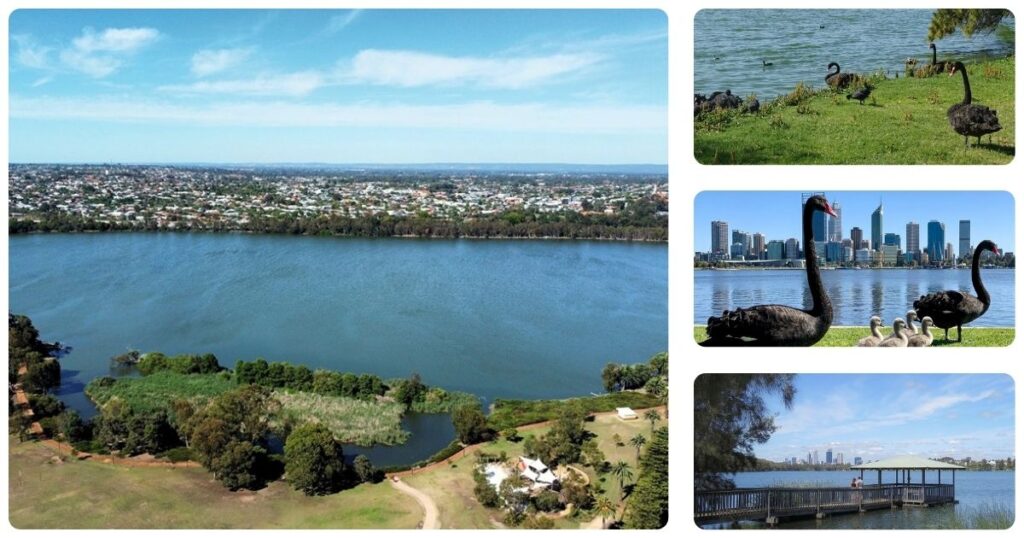
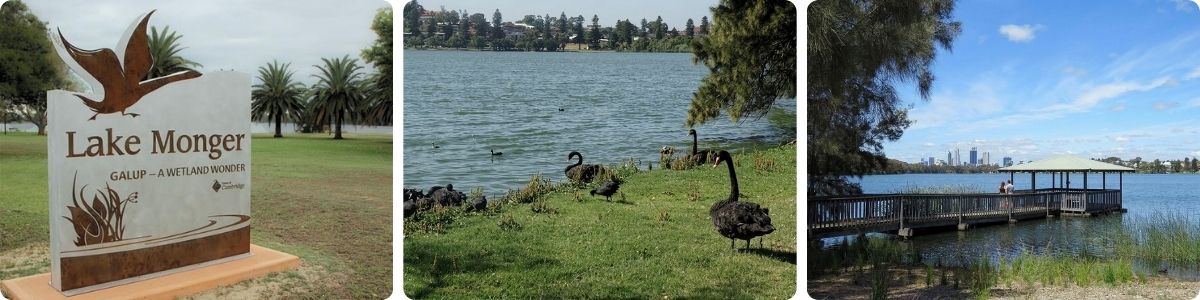
Five kilometres from Perth CBD, a paved path circles a 70-hectare wetland where black swans, sometimes in their hundreds, drift past unbothered by the joggers and cyclists on the bank. This is Galup, renamed from Lake Monger in 2025, which means “place where the home fires burn,” reflecting its significance to the Whadjuk Noongar people as a gathering and living place for thousands of years.
Both names are still in common local use, and you’ll see a mix of old and updated signage as the change rolls out, but Galup is the official current name.
Who It Suits
Early-morning walkers and runners wanting a flat, reliable loop close to the city, birdwatchers and photographers after black swans and a good species count, families with older kids, cyclists after a low-stress ride, and dog owners (on-leash) wanting somewhere pleasant and central. It’s not the spot for swimming, boating or a big playground day out; this is a nature reserve rather than a recreation park.
What’s Actually Here
The 3.5km sealed loop is the reserve’s spine: flat, well maintained, wide enough for pedestrians and cyclists to share comfortably, and suitable for wheelchairs and prams. Walking it at a casual pace takes 45 to 60 minutes; add 30 minutes or more if you’re stopping at lookout points for photography. Cycling the full loop takes as little as 25 to 30 minutes.
- The north shore has the best concentration of lookout platforms and is where most black swan photography happens, particularly good in the early morning (roughly 6:30 to 8am) when the light is best and the path is quietest.
- The east shore is more tree-lined and generally the better birdwatching stretch for cormorants and seasonal magpie-geese.
- The south shore is closest to Leederville and the least scenic section, useful mainly as the practical link if you’re combining the walk with a cafe stop.
- The west shore is more open and exposed to wind but works well in late afternoon.
Thirty-eight bird species have been recorded here, with black swans the headline year-round resident alongside purple swamphens, Eurasian coots, chestnut teal, Pacific black ducks, Australasian shelducks, great egrets and white ibis. Magpie-geese arrive in greater numbers during the spring and summer breeding season, and cormorants and spoonbills are common sightings, particularly around early morning fishing activity.
Black Swans and Breeding Season
Black swan chicks generally start appearing from October, with numbers peaking through November as spring breeding gets underway, so late spring is the best window if seeing cygnets matters to you. By summer, young birds are largely indistinguishable from adults. Adults are present year-round, so a sighting is effectively guaranteed on any visit; the seasonal variation is really about chicks and breeding activity rather than presence.
Practical Details
Entry is free and the reserve is accessible 24 hours. Facilities include multiple lookout platforms, scattered picnic benches, limited first-come barbecue facilities, and clean, well-maintained toilet blocks, along with free parking at several points around the perimeter (car park 4, near the Leederville freeway entrance, tends to be less busy than the main entrances).
There’s no formal visitor centre or on-site food vendor, though food trucks occasionally set up near the reserve on weekends, so don’t assume you’ll be able to buy food on any given visit; bring your own if you’re not planning a Leederville stop. Dogs are welcome on-leash on the paths and grassed areas, though off-leash swimming isn’t permitted. Fishing and swimming in the lake itself aren’t permitted, since it’s managed specifically for wildlife and passive recreation.
Getting There
By car, free parking is available at multiple points around the perimeter; arrive before 10am on weekends if you want an easy spot near the main entrances. Both Leederville and Glendalough train stations sit close by, each roughly a 15 to 20-minute walk from different sides of the lake, useful if you’re combining the visit with Leederville’s cafe strip or arriving from the northern suburbs via Glendalough.
By bus, routes 15, 85 and 95 all have stops within easy walking distance of the reserve, connecting from Perth Busport, Glendalough Station, Wembley and Subiaco; the 85 from central Perth is the quickest, taking around 7 minutes. Check the Transperth journey planner for the current timetable and closest stop to whichever side of the lake you’re heading for.
Cycling is one of the best ways in if you’re staying anywhere in the inner northern suburbs, since Galup connects into Perth’s broader bike path network.
What Locals Know
Regulars walk the north shore early, before 8am, specifically to beat both the crowds and the heat, and treat weekday mornings as the reliably quiet window compared with the noticeably busier 10am to 2pm weekend stretch. Locals also know car park 4, closer to the Leederville freeway entrance, is usually the easiest to find a spot in in peak periods, and that pairing the walk with breakfast in Leederville (about 800 metres, a 12 to 15 minute walk from the south side) is the default combination for a proper morning out rather than treating the lake as a standalone stop.
One thing worth knowing is that black swans can be surprisingly assertive if you get too close, particularly near nesting areas in spring, so keep a respectful distance rather than approaching for a closer photo.
Combine With Leederville
Leederville’s Oxford Street cafe strip, a short walk south, has a strong concentration of independent cafes and casual restaurants, and pairing a lake walk with a late breakfast or brunch there is the natural way to build a half-day out of a visit that might otherwise only take an hour.
Is It Worth It?
Yes, particularly as a low-effort, high-reward add-on to a Perth itinerary rather than a dedicated day trip. It delivers reliable wildlife viewing, a flat and accessible walking loop, and useful proximity to Leederville, all within five minutes of the CBD by car. Go early if you want the quietest experience and the best light for photography.
Frequently Asked Questions
Is it called Lake Monger or Galup now?
Officially Galup, since 17 June 2025. Lake Monger remains in common local use and both names are understood.
When do black swan chicks appear?
From around October, peaking in November. By summer, cygnets are largely indistinguishable from adult birds.
Is the path wheelchair accessible?
Yes, the full 3.5km loop is sealed and flat, with accessible toilets available.
Can I swim or fish here?
No, neither is permitted. The lake is managed for wildlife and passive recreation only.
How long does the full loop take?
45 to 60 minutes walking at a casual pace, 25 to 30 minutes cycling, longer if you stop frequently for photography or birdwatching.
Is it crowded?
Weekends between 10am and 2pm and school holidays are the busiest windows. Weekday mornings and late afternoons are noticeably quieter.
Can I bring a picnic?
Yes, with scattered benches and open grassed areas around the reserve, though bring your own food and drink since there’s no reliable on-site vendor.
How do I get there without a car?
Bus routes 15, 85 and 95 all stop within easy walking distance of the reserve from Perth Busport, Glendalough Station, Wembley and Subiaco, with the 85 taking around 7 minutes from central Perth. Leederville and Glendalough train stations are both a 15 to 20-minute walk from different sides of the lake.
The Close
Galup delivers exactly what it promises: genuine, reliable wildlife within five minutes of the CBD, a flat and accessible loop that suits almost anyone, and an easy pairing with Leederville’s cafes for a proper half-day out. Go early for the best light and quietest path, and give the black swans the space they’re due, especially around spring nesting time.