
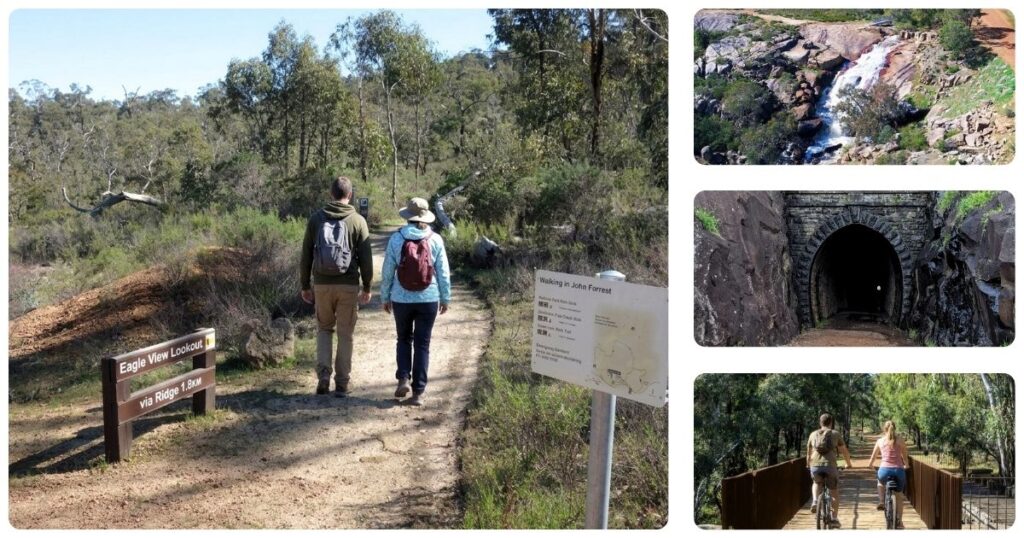
Twenty-four kilometres east of Perth, roughly a 30-minute drive, water tumbles over granite sheets into a plunge pool at Hovea Falls, one of two waterfalls inside Western Australia’s oldest national park. The park was proclaimed in November 1900, initially named Greenmount National Park in 1902, and renamed John Forrest National Park in 1947 to honour WA’s first premier. It covers around 2,700 hectares of jarrah, marri and flooded gum forest across the Darling Range, and it remains one of the more varied bushwalking destinations within easy reach of the city.
Who will Enjoy John Forrest National Park
Bushwalkers wanting real trail variety in one location, families after an accessible waterfall walk, cyclists and mountain bikers (the park permits both, alongside horse riding on designated trails), and spring wildflower chasers. It’s not the place to bring a dog; John Forrest has a strict no-dogs policy, unlike some other Perth Hills parks, so plan accordingly if you’re travelling with a pet.
The Waterfalls
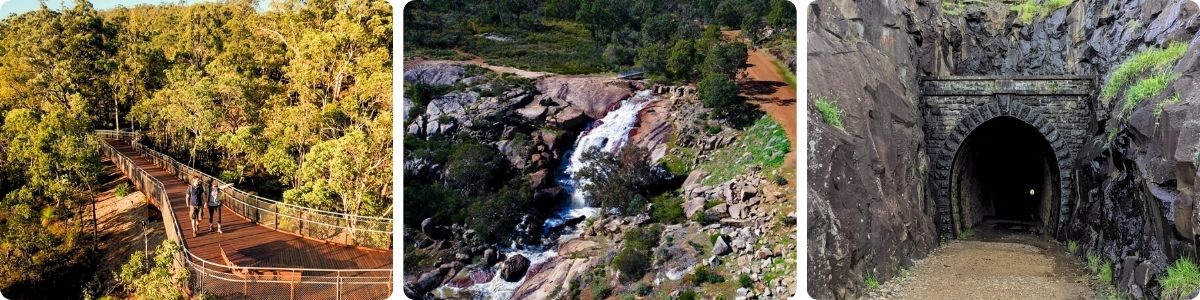
Hovea Falls and National Park Falls are the park’s headline features, both fed by Jane Brook and running strongest through winter and spring after consistent Darling Range rainfall; by late spring and through summer, flow drops off significantly and can reduce to a trickle. Hovea Falls slides over a large sheet of granite rather than dropping in a single sheer cascade, and is reached via the Glen Brook Trail. Water is cold year-round regardless of season, so treat any swim as a brief, bracing dip rather than a long soak, and take care on wet granite, since the park’s own safety guidance flags slip and fall risk around the waterfalls as a genuine hazard.
Walking and Cycling Trails
The park’s official trail network gives you a range of options rather than a single set path. The Glen Brook Trail is a 2.2km loop (with a longer 4.5km, Class 3 variant in some route descriptions) following Glen Brook past granite outcrops and a small dam, and is the most direct route to Hovea Falls. The Wildflower Walk Trail runs 4.5km (Class 3) and is the best bet if you’re visiting during spring bloom, roughly August to November, when the park’s wildflowers, including featherflowers in November, are at their best. The Christmas Tree Creek Walk Trail is a longer 10.5km option through more of the park’s interior, and the Eagle View Walk is the park’s most demanding, at 15km, better suited to fit, experienced walkers with a full day to spare. Several of these trails also intersect with the Railway Reserves Heritage Trail, a separate long-distance walking and cycling corridor that runs through the park along an old rail alignment and connects out toward Mundaring and Midland.
One heritage feature worth building a stop around regardless of which trail you choose is the Swan View Tunnel, WA’s only historic railway tunnel, cut through granite in 1894 on the old Eastern Railway alignment to York and running roughly 340 metres, atmospheric and one of the more distinctive heritage sites in the Perth Hills.
Wildlife and Cultural Significance
Western grey kangaroos are commonly seen resting in the park’s more open areas, and the bushland supports a wide range of native birdlife. The park sits on Whadjuk Noongar country; Jane Brook holds particular cultural significance, with a connection to the Dreamtime serpent the Waugal, and the rocks in and along the brook are said in Noongar tradition to be the droppings of this creature. There’s anecdotal evidence the wider area was used as a hunting ground and travel route across the Darling Scarp before European settlement.
Practical Details
Standard vehicle entry is $15 (concession $8), payable at self-registration points at the park’s three entrances off Great Eastern Highway; a valid WA Parks pass also covers entry. The western gate on the Park Road scenic drive is locked overnight, so check specific entrance hours if you’re planning a late finish. There’s no drinking water at the site, so bring at least 2 litres per person, along with sun protection and sturdy footwear, since several trails cross rocky or uneven ground. Picnic areas and barbecues are available near the main facilities, but there are no shops or cafes inside the park itself.
Getting There
Driving is the practical option for most visitors: about 30 minutes from the CBD via Great Eastern Highway, with entrances and self-registration parking off the highway itself.
A limited public transport route does exist if you don’t have a car: take the Midland line train to Midland Station, then transfer to bus route 320 toward Great Eastern Highway, getting off near the Waylen Road area and walking the remaining distance to the park entrance; the full trip from central Perth runs over an hour door to door, so it suits a patient, unhurried day rather than a quick visit. Check the Transperth journey planner for current timetables and the closest stop to whichever trailhead you’re heading for, since bus routes in the area are reviewed periodically.
The park is also reachable on foot or by mountain bike via the Railway Reserves Heritage Trail if you’re already in the area, though this adds significant time and isn’t realistic for most visitors coming from central Perth.
What Locals Know
Regular Perth Hills walkers rate the Glen Brook Trail as the best first-timer’s introduction, since it delivers a genuine waterfall payoff without committing to a full day. Locals also plan waterfall visits around recent rainfall rather than a fixed month, since flow can vary noticeably year to year depending on how wet the preceding winter has been. The Eagle View Walk’s 15km length means it’s mostly a locals’ and serious hikers’ trail rather than a casual visitor route; if you’re not confident about distance and fitness, one of the shorter loops is the safer choice. Spring weekends, particularly during peak wildflower season, are noticeably busier than winter weekday visits, when you can often have entire trail sections to yourself.
Is It Worth It?
Yes, particularly for its genuine variety: two real waterfalls, trail lengths ranging from a short loop to a serious 15km walk, a heritage rail tunnel, and reliable wildlife sightings, all inside WA’s oldest national park. Time your visit for winter through spring if waterfalls and wildflowers matter to you, and check current trail conditions with the Mundaring DBCA office if you’re planning a longer walk after recent rain.
Frequently Asked Questions
Is there an entry fee?
Yes, $15 per standard vehicle ($8 concession), payable at self-registration points at the park entrances, or covered by a valid WA Parks pass.
Can I bring my dog?
No. John Forrest National Park has a strict no-dogs policy.
When should I visit for waterfalls?
Winter through spring (roughly June to September) for the strongest flow, tapering off through October and November. By summer, both falls typically reduce to a trickle.
How long are the trails?
From a 2.2km Glen Brook Trail loop up to the demanding 15km Eagle View Walk, with the Wildflower Walk Trail (4.5km) and Christmas Tree Creek Walk Trail (10.5km) in between. Choose based on your fitness and time available.
Is the park accessible for people with mobility issues?
Accessible parking is available near the Ranger’s Office, but most trails involve uneven or rocky terrain. Contact the Mundaring DBCA office on (08) 9290 6100 ahead of your visit to discuss specific needs.
What about snakes?
The Darling Range is home to native snake species. Stay on marked trails, wear closed footwear, and be aware, but serious encounters are rare if you take standard bushwalking precautions.
How do I get there without a car?
Take the Midland line train to Midland Station, then bus route 320 toward Great Eastern Highway, followed by a walk to the park entrance. It’s a workable but slow option, over an hour door to door, so driving remains the more practical choice for most visitors.