
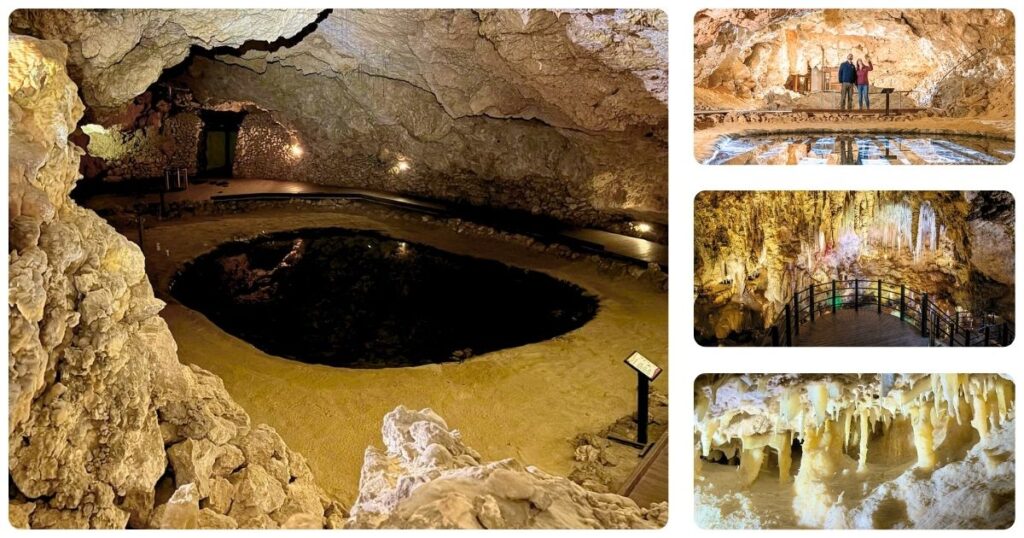
Stand at the top of a descent into darkness and switch on the cave lights: limestone walls take on real texture, stalagmites rise from the floor, and stalactites hang overhead, some shaped by tens of thousands of years of groundwater dissolving and re-depositing minerals. This is Crystal Cave, Perth’s only accessible metropolitan tourist cave, inside Yanchep National Park roughly 45 minutes north of the CBD. It won’t compete with cave systems in Thailand or Mexico on scale, but in a Perth context it’s real, old, underground geology you can visit without a flight.
Who will Enjoy the Crystal Cave
Families with school-age kids, casual geology and nature enthusiasts, and anyone wanting a distinctive half-day trip that isn’t a beach or a bushwalk. It’s not suitable for prams, and the cave includes at least one section with a ceiling height as low as around 1.23 metres, so you’ll need to bend and move through tighter spots; if mobility or bending is difficult for you, it’s worth calling ahead to check whether the tour is manageable.
What You’re Actually Looking At
Yanchep National Park sits on a limestone karst landscape, where mildly acidic groundwater has dissolved the rock over very long timescales to create voids and caverns. The park contains well over 500 recorded caves, with estimates running as high as 1,000 including smaller karst features, but only three are open to the public: Crystal Cave, Yonderup Cave and Cabaret Cave. Crystal Cave is the headline attraction, its name reflecting the clarity and glint of some of its mineral formations under the cave lighting. Expect stalactites (hanging from the ceiling), stalagmites (rising from the floor), helictites, flowstones, shawls and occasional columns where formations have met over time, with guides often pointing out shapes that resemble animals or faces as part of the tour’s storytelling.
The Guided Tour
Access is by guided tour only, for safety reasons; there’s no self-guided option. Tours run daily, roughly every hour through the day (typically around 10:30am, 11:30am, 1pm, 2pm and 3pm, though confirm current times when booking), each lasting about 45 minutes including the briefing, descent, cave walk and return. The cave holds a constant temperature of roughly 16 to 18°C year-round, noticeably cool by Perth standards even in summer, so bring a light layer regardless of the season. Tours can be booked online in advance or purchased on the day at McNess Visitor Centre, though booking ahead is worth doing during school holidays and weekends when tours can fill.
Pricing
As of early 2026, the Crystal Cave tour runs to roughly $14 to $15 per person, with separate child pricing typically available; confirm current rates when booking since pricing is reviewed periodically. Yanchep National Park entry is charged per vehicle rather than per person, currently around $17 for a standard vehicle, with different rates for concessions and larger vehicles, so budget for both the park entry and the cave tour separately.
Beyond the Cave: The Rest of Yanchep National Park
The Koala Boardwalk, a free, elevated 240-metre timber walkway through eucalyptus forest, is the park’s other headline feature. It’s worth knowing the koalas here form an introduced, managed colony rather than a wild self-sustaining population native to WA, established well before living memory as part of the park’s development; sightings aren’t guaranteed, since koalas blend into the canopy and aren’t always visible, but early morning or late afternoon generally improve your odds.
The flat walking trail around Loch McNess (renamed in 1935 after Sir Charles McNess, a major contributor to the park’s early development, having previously been known as Lake Yanchep) is a solid birdwatching option and a gentler add-on if you want to extend your visit without a big time commitment. Yonderup Cave offers a second guided cave experience if you want more than Crystal Cave alone, and Cabaret Cave, the largest of the three open caves, is generally used for events rather than standard tours. Nearby, a working lavender farm and the heritage Yanchep Inn round out the options if you want a food or accommodation stop attached to your visit.
Getting There
Driving is the easiest option: Yanchep National Park is roughly 45km north of the CBD via Indian Ocean Drive, about 45 minutes depending on traffic, with parking at McNess Visitor Centre.
The Yanchep train line (Perth’s northernmost line, extended to Yanchep Station in late 2024) covers the distance in a similar timeframe, but the station itself sits several kilometres from the park entrance, so you’ll need a taxi, rideshare or connecting local bus to complete the trip, making it a slower option than driving door to door.
Transperth buses do serve the wider Yanchep townsite, but the closest stops to the park entrance are a substantial walk away, so check the Transperth journey planner for current routes before relying on public transport alone; for most visitors, particularly families with the cave tour timeslot to make, driving remains the practical choice.
What Locals Know
Regular visitors know to book the cave tour ahead during school holidays specifically, since it’s a popular, easy family outing and tours do sell out on the busiest days. Locals also treat the Koala Boardwalk sightings as hit-or-miss and plan an early or late visit rather than a midday one to improve their chances, and they’re generally realistic with visiting friends about the koalas being a managed colony rather than truly wild, since it sets more accurate expectations. If you’re combining the cave with outdoor walks, locals favour spring and autumn for comfort, since summer heat outside makes the cave’s cool interior a genuine relief but can make the rest of the park’s walks less pleasant in the middle of the day.
Is It Worth It?
Yes, particularly as a half-day trip that’s different from Perth’s beaches and bushwalks. The cave tour alone is a solid, well-run 45 minutes, and pairing it with the free Koala Boardwalk and a walk around Loch McNess turns it into a proper half or full day out. Book the cave tour ahead if you’re visiting during school holidays, and bring a light layer regardless of the season.
Frequently Asked Questions
Is Crystal Cave worth the drive?
Yes, if you’re interested in a distinctive, well-guided attraction that’s unlike anything else in metropolitan Perth. It works particularly well combined with the free Koala Boardwalk for a fuller day.
How long does the whole visit take?
The cave tour itself is about 45 minutes. Add the Koala Boardwalk (around 30 minutes) and the Loch McNess walk (60 to 90 minutes) for a fuller visit, plus roughly 45 minutes’ drive each way from the CBD.
Can I do a self-guided tour?
No, Crystal Cave is guided-tour access only, for safety reasons.
Is it accessible for people with mobility issues?
The cave isn’t suitable for prams and includes at least one low-ceiling section requiring bending. Contact McNess Visitor Centre ahead of your visit if you have specific accessibility questions.
Will I definitely see koalas on the boardwalk?
No guarantee. They’re not always visible in the canopy; early morning or late afternoon generally offer better odds.
What should I bring?
Comfortable walking shoes, a light layer for the cave’s cool interior, and sun protection for time outdoors elsewhere in the park.
How do I get there without a car?
The Yanchep train line reaches Yanchep Station in a similar timeframe to driving, but you’ll need a taxi, rideshare or connecting bus for the last few kilometres to the park entrance. Given the cave tour runs on a fixed timeslot, driving is the more reliable option for most visitors.
The Close
Crystal Cave delivers something different from the rest of Perth’s day-trip options: real underground geology, a well-run guided tour, and a cool escape from the heat, all inside a national park that also offers koalas, a lake walk and a working lavender farm. Book the cave tour ahead during school holidays, bring a layer for the cool cave air, and set realistic expectations about the koala sightings.